TOP > About AISIN > Corporate Governance

Corporate Governance


■Basic approach

With an aim of maximizing corporate value, AISIN aims to grow and develop stably in the long term by building good relationships with all stakeholders.

In order to achieve this objective, we believe that it is important for us to promote fair and transparent management as corporate citizens who enjoy the trust of the international community, and we are therefore doing our utmost to improve corporate governance.


■System

AISIN has adopted an auditor system and, as a statutory institution, has established general meetings of shareholders, a board of directors and a board of auditors.

The board of directors as a rule meets once a month. As well as discussing legal matters, it passes resolutions on important matters related to management affairs, including management policy, business planning, planning of capital investment, establishment of subsidiaries, and investment in subsidiaries. It is also responsible for supervising the execution of work.


The board of auditors consists of five auditors including three external auditors. Starting in fiscal 2009, the board of auditors increased its meeting frequency from four times a year to once a month, as a general rule. Auditors audit the execution of work performed by directors in accordance with auditing policy and planning thus determined, and keep track of how each sector is performing its work. They thus verify whether management and business activities are being carried out in accordance with the law and the company’s articles of association.


Since fiscal 2006, in order to strengthen the independence of the board of auditors from the board of directors, we have set up Corporate auditors dept. as an organization under the direct control of the board of auditors and have assigned full-time staff specifically to support auditors in the performance of their duties.


Also in fiscal 2006, we ventured to strengthen group management in response to the globalization of business and the accompanying increase in the ferocity of competition. We also set about strengthening our institutional structure to accelerate the decision-making process and the implementation of work. We established the new position of managing officers in charge of execution of work, assigned officers holding this position to each sector within the company, and gave presidents of leading overseas subsidiaries concurrent positions as managing officers. We also defined senior managing directors as “officers with responsibility for reaching decision in connection with execution of work” and directors of the rank of vice president and above as “officers responsible for formulating business strategy and supervising the execution of work.”


We have also set up a Management Committee, a Corporate Officers Committee and Functional Committees, which are responsible for deliberating individual matters and supervising and providing guidance and advice on the execution of work on the basis of policy determined by the Board of Directors.


Diagram: Management structure (as of June 20, 2008)


Message from Newly Appointed External Auditor
I will emphasize legal compliance, ensuring fairness and transparency, and fulfilling responsibility for explanation in my auditing duties.

Although I am engaged in business law research at Nagoya University focusing the Companies Act, I have recently taken the position of external auditor for Aisin Seiki. The most fundamental of the various regulations governing joint-stock companies in Japan is the Companies Act, which was passed in 2005 and enacted in 2006. As its framers intended, this law is characterized by its flexibility and neutrality. Under the Companies Act, the scope of actions companies can freely undertake is substantially broader than under previous regulatory structures. However, such freedom naturally necessitates that fairness and transparency of procedures be ensured when taking actions, and that the responsibility of explanation to shareholders and society on the reasons for such actions be fulfilled.


Related to these issues is the already frequently mentioned problem of the widespread hollowing out of boards of directors, which were originally intended to thoroughly consider important business management issues. In my audit duties, I will naturally emphasize legal compliance as a researcher in business law, and from my independent perspective I aim to devote special attention to the issues of whether thorough discussion is taking place at board of directors meetings, whether the fairness and transparency of procedures is being maintained, and whether the responsibility for explanation is being fulfilled.


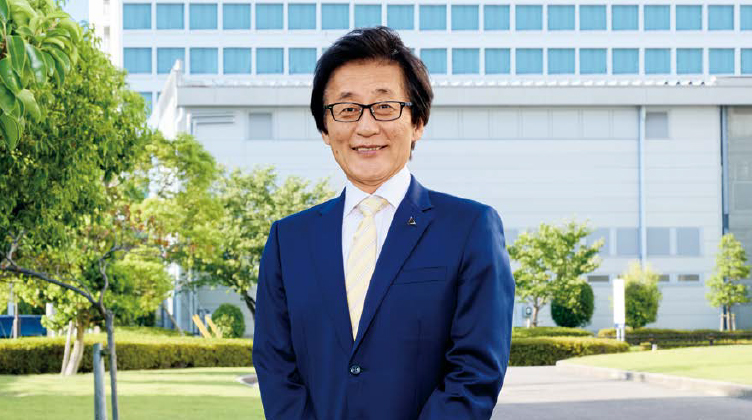
  Photo: Ryo Kobayashi, Auditor

Ryo Kobayashi, Auditor

Professor, Nagoya University Graduate School of Law
Assumed the position of outside auditor in fiscal 2010


■Responding to Stakeholders' Interests and Concerns

AISIN considers that active realization of its social responsibilities stands at the heart of its business activities and we have enshrined that conviction in the “AISIN Charter of Corporate Behavior.”


We have also set up committees tasked with promoting management that addresses the interests and concerns of internal and external stakeholders, including the Business Ethics Committee, the Environmental Committee, and Central Safety and Health Committee. These committees monitor activities inside the company in accordance with their respective topics and report on the results to the Board of Directors with the aim of improving activities of all kinds.


■Internal Controls

Basic Policy Concerning the Establishment of Internal Control
In response to the enactment of the Companies Act, AISIN’s Board of Directors passed a motion in May 2006 in connection with “Basic policy concerning the establishment of internal control.”


Continuous efforts toward maintenance and improvement are being made on the basis of this policy in forms such as ensuring greater thoroughness on the operational front inside the company and reviewing the system itself.


Handling Assessments of the Efficacy of Internal Controls on Financial Reporting (Internal Control Reporting System)
In connection with handling assessments of the efficacy of internal controls on financial reporting (the internal control reporting system), AISIN established a companywide project team within the Corporate Risk Management Department in 2006. The project team promotes the maintenance of companywide internal controls, account settlement process controls, business process (management of sales, accounts receivable, inventory assets, purchasing, etc.) controls and general information technology controls, in accordance with the Financial Instruments and Exchange Act and the Financial Services Agency’s practice standards. In addition, Aisin Seiki has specified a policy to Group companies in Japan and overseas on how to handle internal controls. Based on internal assessment of the status of internal controls, we have identified items requiring improvement, upgraded systems, and developed and thoroughly implemented regulations.


The assessment of the first year of the internal control reporting system concluded that the Company’s internal controls on financial reporting were functioning effectively as of March 31, 2009. In June 2009, we disclosed this information in an internal control report.


PricewaterhouseCoopers Arata judged the Company’s internal control report appropriate, and provided its audit report in relation to the document.


Basic Policy Concerning the Establishment of Internal Control
1.System for ensuring that the execution of duties by directors complies with laws and the articles of incorporation.
Based on the Company’s corporate principles and Charter of Corporate Behavior, directors shall work to maintain systems to ensure compliance with laws and the articles of incorporation.
(1) During training upon appointment to their positions and at other relevant times, we shall thoroughly train directors to act in accordance with laws and the Articles of Incorporation by using guidebooks and other materials that address corporate behavioral ethics and the legal knowledge necessary for directors.
(2) In executing tasks, directors shall make decisions upon comprehensive deliberation not only in the Board of Directors and the Management Committee, but at all manner of committees, councils and other cross-organizational meetings.
(3) We shall establish a committee on corporate behavioral ethics, which shall deliberate on and determine policies and systems for legal and corporate ethics compliance.
2.System for storage and management of information regarding execution of duties by directors
Information regarding execution of duties by directors shall be appropriately stored and managed by each responsible department, based on relevant regulations and laws.
3.Regulations concerning management of the risk of loss, and other systems
We shall establish a committee on risk management, which shall deliberate on and determine important policies and systems regarding risk management, including ascertainment and evaluation of companywide risks, and identification of matters against which we need to focus on countermeasures. Based on these policies and systems, we shall take precautions to prevent risks, and respond to any crises that should become apparent.
4.System for ensuring efficient execution of duties by directors
(1) We shall carry out consistent policy management by making concrete policies at each level of the organization on the basis of medium-term management plans and yearly corporate policies.
(2) Within our officer system of directors and managing officers, directors shall direct and supervise managing officers based on management policy and grant them executive authority within each department in order to exercise agile decision-making.
5.System for ensuring that the execution of duties by employees complies with laws and the articles of incorporation.
(1) Based on the policies of the committee on corporate behavioral ethics, employees shall be thoroughly trained in compliance matters via distributed guides on corporate ethics and through legal education and education at each management level.
(2) We shall ensure that information that addresses issues and questions regarding compliance matters is quickly obtained through corporate ethics consultation contact point and other services, so that such matters are understood and resolved early on.
(3) We shall carry out on-site audits by an internal auditing department.
6.System for ensuring the appropriateness of tasks in the corporate group consisting of the joint-stock company and its parent company and subsidiaries
(1) Based on the common basic principles of the Group and the Charter of Corporate Behavior, we shall work to maintain systems to ensure compliance with laws and the Articles of Incorporation, and ingrain those systems through human interaction.
(2) We shall place subsidiary management functions within the corporate planning department, and work to ensure the appropriateness of each company’s business activities by ascertaining each company’s planning and results pertaining to such activities.
(3) We shall provide advice and support toward maintaining systems for ensuring information distribution to each Group company and the appropriateness of its business activities, though meetings as a corporate group and information sharing among each functional department on both a periodic and an as-needed basis.
7.Matters concerning employees appointed on request to assist corporate auditors with their duties
We shall establish a dedicated department for assisting corporate auditors with their duties, and assign employees to posts therein.
8.Matters concerning the independence of employees referred to in the preceding item from directors
The designation of employees to assist corporate auditors with their duties shall require the prior approval of the Board of Auditors or a standing corporate auditor specified by the Board of Auditors.
9.System for reporting to corporate auditors by directors and employees, and other systems concerning reporting to corporate auditors
(1) Directors shall report to the corporate auditors on the execution of main tasks via the departments responsible in a timely and appropriate manner, and shall immediately report to the corporate auditors upon discovery of any fact that could cause significant harm to the Company.
(2) Directors, managing officers and employees shall report business matters to the corporate auditors on a periodic and as-needed basis, as per requests by the corporate auditors.
10.Other systems for ensuring effective performance of audits by corporate auditors
(1) To enhance the effectiveness of audits performed by the corporate auditors, directors shall actively cooperate in their audit activities, including corporate auditors’ attendance at important meetings, review of important documents, activities of on-site audits of plants and subsidiaries, and meetings with accounts auditors.
(2) The internal auditing department shall interface closely with the corporate auditors and report to them the results of internal audits.


PAGE UP