CSR > FAQ

FAQ

Environmental Efforts

↓ Q1. What is AISIN's stance toward the environment?
↓ Q2. What measures has AISIN undertaken for the environment?
↓ Q3. What environmentally friendly products does AISIN have?

Social Contribution

↓ Q4. What sort of corporate citizenship activities does AISIN undertake?
↓ Q5. Does AISIN have a childcare leave system?
↓ Q6. How does AISIN support the employment of persons with disabilities?

AISIN Report

↓ Q7. What is the AISIN REPORT?
↓ Q8. How can I get a copy of the AISIN REPORT?
↓ Q9. Can I access past issues of reports?

Other Issues

↓ Q10. Is there any specialized terminology AISIN uses when discussing the environment?


Q1. What is AISIN's stance toward the environment?
A1. As a company active in the automobile industry, which is directly connected to environmental issues, AISIN pursues thorough application of environmental management in every business activity, and plans to continue actively pursuing environmental activities.
Click here for details.

Q2. What measures has AISIN undertaken for the environment?
A2. AISIN's environmental efforts can be seen in such activities as product development and production.

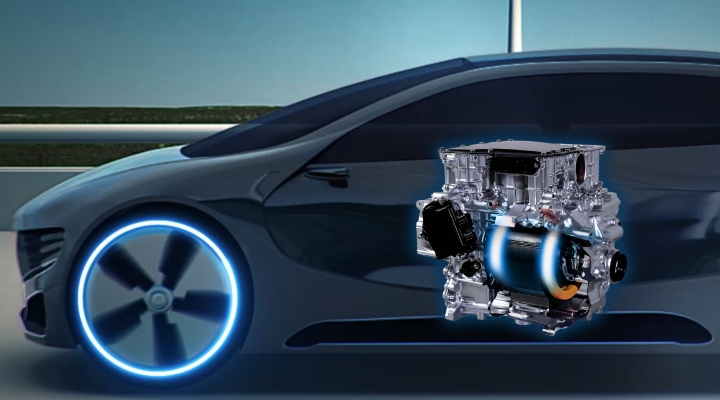
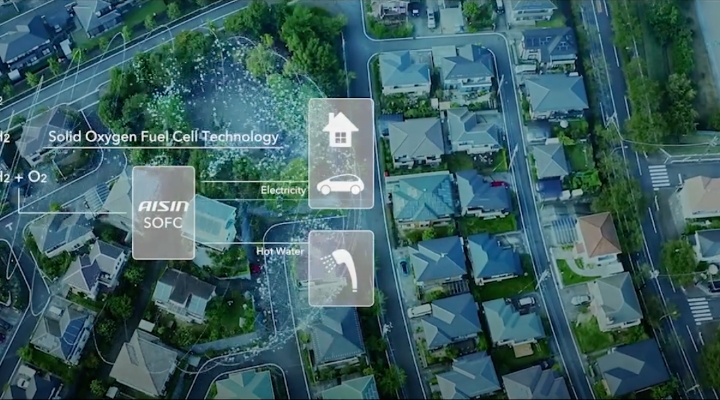
(1) In product development, AISIN is aggressively conducting technological development that will improve fuel efficiency and reduce weight in automobiles as well as reduce use of environmentally hazardous substances, while concurrently developing such ecological products as residential fuel cells.

(2) In production, while working to eliminate the use of hazardous chemical substances, AISIN is also engaged in the reduction of CO2 emissions and the elimination of waste.

(3) AISIN employees have a keen environmental awareness and actively participate in nature and environmental conservation activities within local communities.


Q3. What environmentally friendly products does AISIN have?
A3. Click here for details.
PAGE UP
Q4. What sort of corporate citizenship activities does AISIN undertake?
A4. AISIN's broad-based corporate citizenship activities comprise three important areas: (1) community building and development; (2) protection of nature and the environment; and (3) fostering of youth.
Click here for details.

Q5. Does AISIN have a childcare leave system?
A5. AISIN has a childcare leave system as well as a variety of other supplemental systems to support balancing work and child rearing.
Click here for details.

Q6. How does AISIN support the employment of persons with disabilities?
A6. AISIN aims for a workplace environment where all employees, with or without disabilities, can work with a sense of vitality based on the principle of "Mutual Respect." The employment rate of persons with disabilities at Aisin Seiki is over 1.8%, exceeding the legally mandated quota of 1.8%.
Click here for details.
PAGE UP
Q7. What is the AISIN REPORT?
A7. The AISIN REPORT is an annual report that includes financial data as well as environmental and CSR activities for the year. Until the fiscal 2005 reports, AISIN published a separate annual report for financial reporting and a sustainability report for detailing our environmental and CSR activities. The two reports have been combined and published as the AISIN REPORT from the fiscal 2006 report.

Q8. How can I get a copy of the AISIN REPORT?
A8. You can request a copy via our website. Please be aware that there are cases where there may be a lag between such requests and actual delivery.
Click here to fill out a request form.

Q9. Can I access past issues of reports?
A9. PDF versions are available on this website for issues dating back to fiscal 2002.
Click here for details.
PAGE UP
Q10. Is there any specialized terminology AISIN uses when discussing the environment?
A10. Here are some of the terms often used in relation to our environmental activities.

1. Hydrofluorocarbon (HFC)
An excellent alternative for fluorine and chlorofluorocarbons (CFCs) that is used as a replacement for fluorine because it does not contain ozone-destroying chlorine.

2. International Material Data System (IMDS)
A material data system used by the automobile manufacturing industry to manage all materials used in the production of automobiles.

3. Life Cycle Assessment (LCA)
A method for comprehensively, scientifically, quantitatively and objectively assessing the total environmental impact and load during the production, use and disposal of products. Environmental impact and load is influenced by such factors as resource and energy consumption and emission of environmentally harmful substances and waste.

4. Polychlorinated Biphenyl (PCB)
PCBs were once used in a variety of applications due to their chemical stability and superb electrical insulation properties, but have since been banned for carcinogenic and other harmful effects. PCBs have also been recently discovered to be an endocrine-disrupting chemical.

5. Pollutant Release and Transfer Register (PRTR)
A system for reporting the discharge and flow volume of chemical substances legally recognized as having an environmental impact.

6. Restriction of the Use of Certain Hazardous Substances in Electrical and Electronic Equipment (RoHS)
Regulations enacted by the European Union on July 1, 2006 for limiting the use of specific toxic substances in electrical and electronic equipment. These regulations were enacted to decrease environmental load during burial and incineration of products after use and prevent the use of toxic substances in recycled materials, targeting lead, cadmium, mercury, hexavalent chromium, polybrominated biphenyl (PBB) and polybrominated diphenyl ether (PBDE).

7. Sulphur Hexafluoride (SF6)
Colorless, odorless and nonflammable, SF6 is a gaseous insulator with excellent electrical insulation and arc extinguishing properties. SF6 is targeted, however, as a gas for reduced use in order to prevent global warming because of its long lifespan in the atmosphere and a global warming potential value of 23,900.

8. Substances of Environmental Concern (SOC)
Substances that impact the environment

9. Volatile Organic Compounds (VOC)
VOC chiefly refers to manmade synthetic substances that can easily be released into the atmosphere at room temperature and under normal pressure. Toluene and xylene are representative VOC substances, although there are over 100 other substances within this category.