

A Flexible Production Line Supporting Second-Generation eAxle
Human-centered manufacturing that unites productivity, adaptability, and meaningful work
Mar.09, 2026
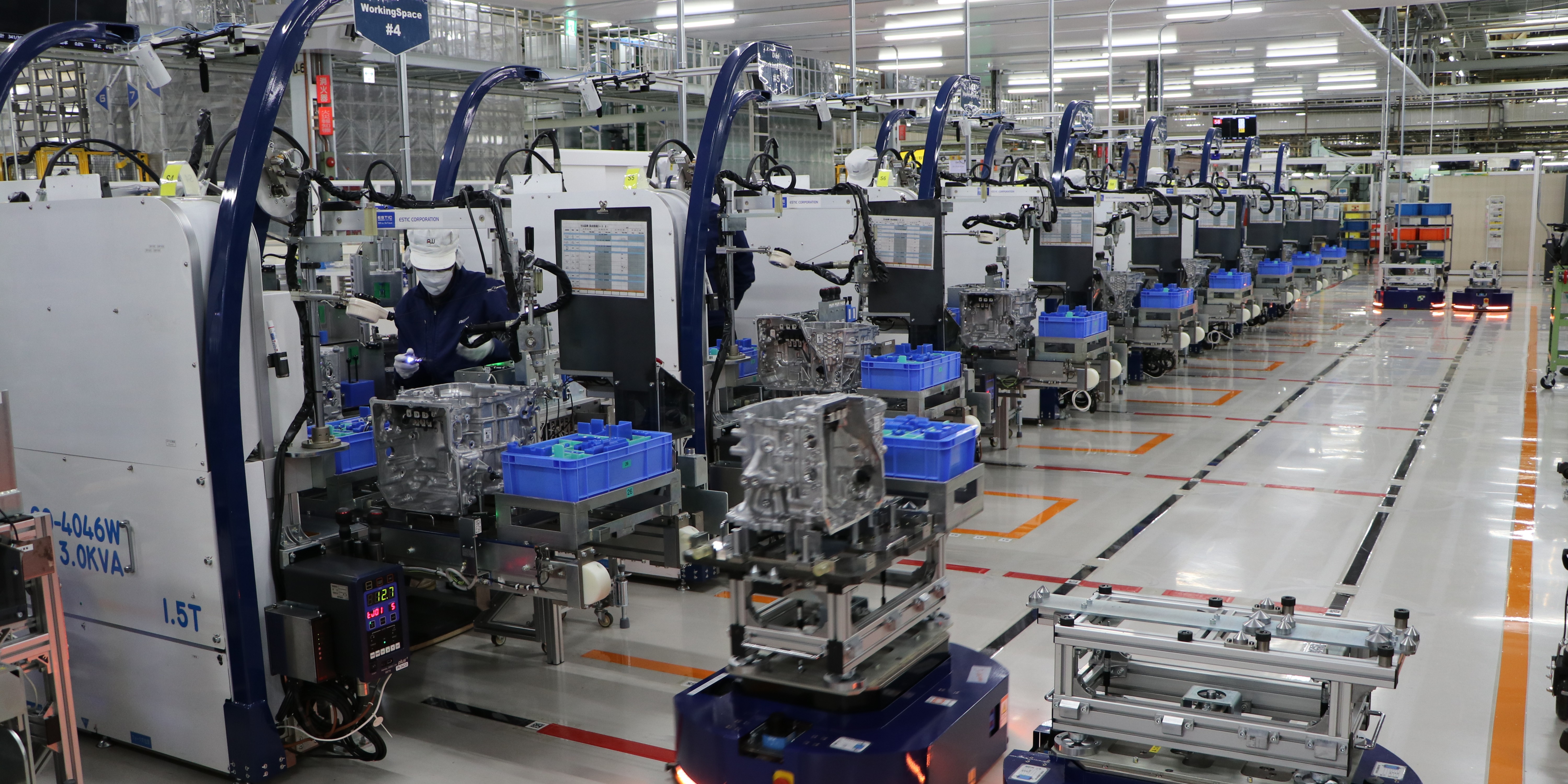
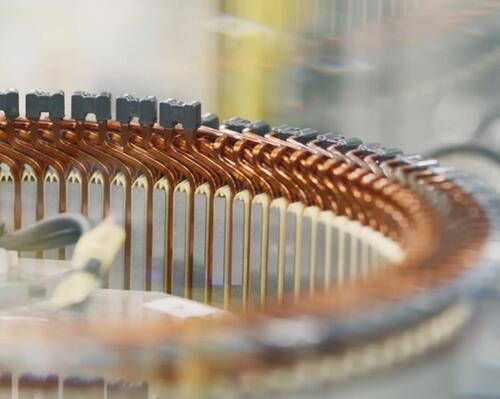
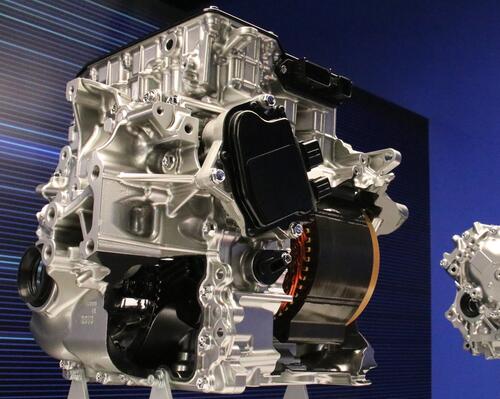
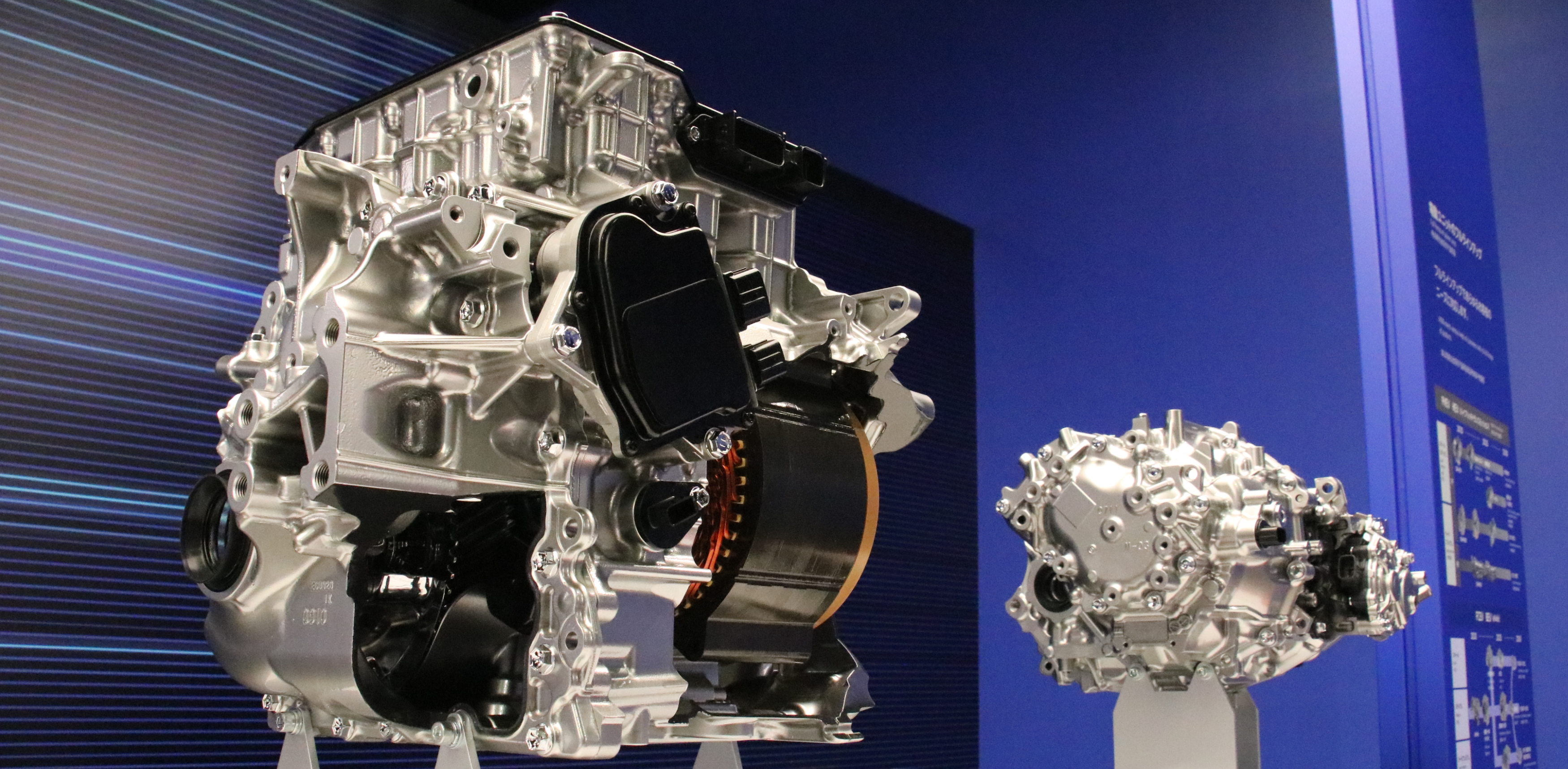
As global demand for electrification continues to evolve, automakers are pursuing region-specific strategies—requiring suppliers to be more agile than ever. AISIN has responded with a highly flexible eAxle production system capable of efficiently manufacturing multiple product variations on a single line while maintaining cost competitiveness. At the core of this approach is AISIN’s proprietary cell-and-line hybrid production system. Processes common across models are consolidated into automated robotic lines to maximize efficiency and quality, while model-specific components and assembly steps are grouped into dedicated cells for skilled human handling. The result is a smart, adaptable manufacturing platform designed to meet diverse market needs with speed and precision.
In this report, we take a closer look at our second-generation eAxle production technology, an advanced system that seamlessly integrates automation and intelligent manufacturing. Beyond improving efficiency and precision, this next-generation approach creates a flexible production environment that empowers the people at the heart of manufacturing. By combining smart technology with human expertise, it delivers not only operational excellence, but also a workplace that inspires pride, ownership and satisfaction among those who bring these products to life.
A cell-and-line hybrid production system as an option
For decades, the automotive industry has relied on the traditional line production system to drive growth and efficiency. By dividing manufacturing into clearly defined steps performed within a fixed cycle time, this approach delivers high productivity, consistent quality, and operational stability. It has long been the foundation of mass production success.
However, in today’s rapidly evolving and increasingly diversified market, the conventional line system alone can struggle to respond with the flexibility automakers now require. Greater product variation and shifting demand call for manufacturing models that can adapt just as quickly as the marketplace itself.
In contrast, the cell production system assigns a single worker responsibility for assembling an entire product from start to finish. This approach fosters a strong sense of ownership and accomplishment, as individuals see the direct results of their work. It can enhance skills, craftsmanship, and job satisfaction. At the same time, it presents challenges, including heavier individual workloads, longer training periods, and potential isolation on the factory floor. From a productivity standpoint, it may also be less efficient than a traditional line system when producing at high volumes.
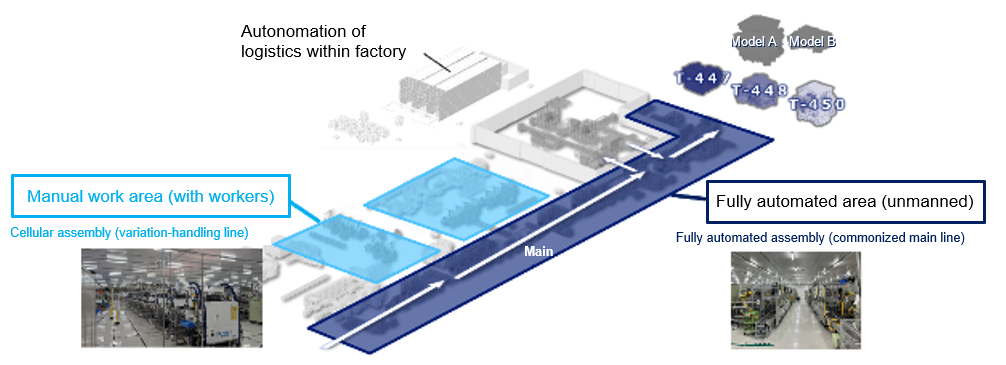
AISIN manufactures eAxles using its innovative cell-and-line hybrid production system—thoughtfully integrating the strengths of both approaches to maximize efficiency, flexibility and quality while minimizing their respective limitations.
Process steps common across multiple models are automated on a shared main line using robotics to ensure high productivity and consistent quality. In contrast, model-specific components and assembly steps are grouped into dedicated cells that serve as variation-handling lines—areas where human judgment, dexterity, and expertise provide the greatest value. Rather than simply blending two systems for the sake of everything hybrid, the philosophy is clear: automate everything possible, and fully leverage the strengths of cell production wherever human skill makes the difference.
Flexible production that evolves generation by generation
This cell-and-line hybrid production system was first introduced with the launch of our first-generation eAxle production line in 2022. That initial implementation allowed us to validate the concept on the factory floor—demonstrating that it was possible to address two critical challenges simultaneously: managing a wide variety of product configurations while preserving and utilizing human expertise.
Along the way, we encountered challenges, particularly in adjusting to process variations. Because cell production areas were dispersed, transportation between steps became complex limiting efficiency and responsiveness.
These issues were resolved with the launch of the second-generation eAxle production line. Building on the lessons learned, we enhanced the strengths of both line and cell production to further improve productivity. A defining feature of the new system is the consolidation of previously scattered variation-handling areas into a unified space, bringing the entire process under one roof. By reducing the distance between process steps and simplifying material flow, we created a layout that makes production easier to visualize and manage. The result is a more streamlined, intuitive manufacturing structure—one that responds quickly and flexibly to process variations while maintaining high efficiency.
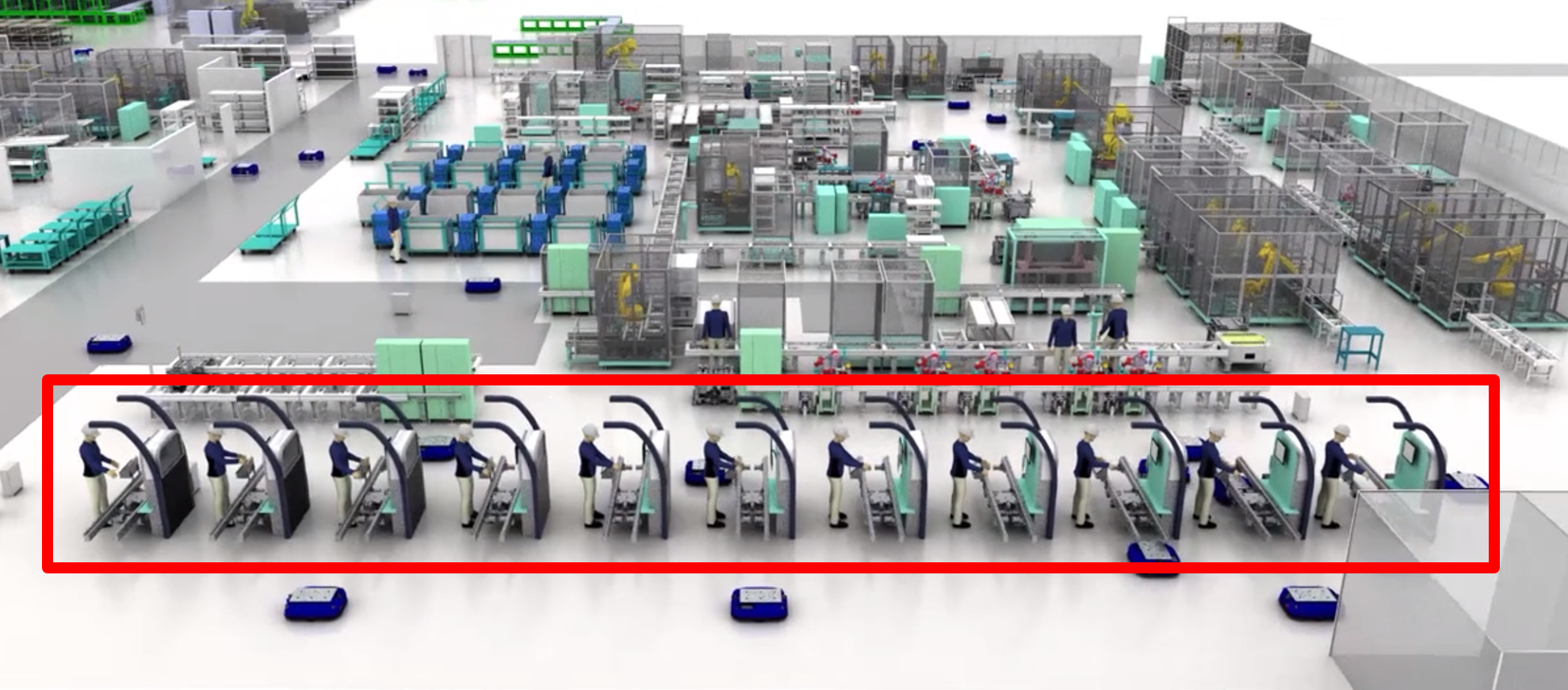
Second-generation production line where variation-handling lines are consolidated
Additionally, the “under-one-roof” approach enabled the workers in the cell production area to share information and follow up on each other’s situations with less effort. Whereas the cell production system often lead to isolated work, the second-generation production line offers the effect of enhancing the sense of unity of those on the entire line.
Enhanced production capacity and automation significantly improved production efficiency in comparison to the first-generation eAxle production line.
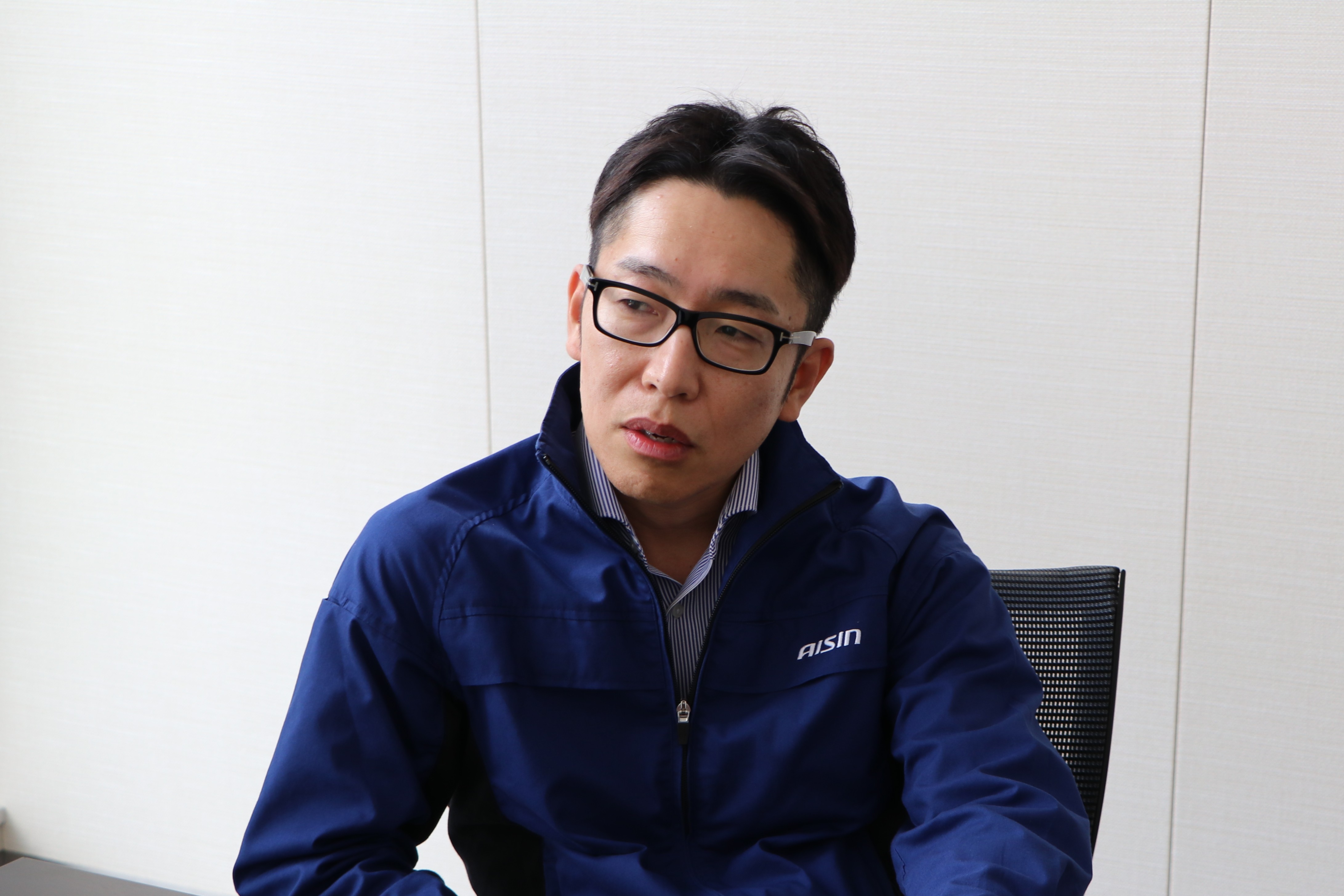
A Production Line Designed for Growth, Pride and Performance
Our cell-and-line hybrid production system is built not only to maximize productivity, but also to create an environment where employees can work with enthusiasm and develop skills. To better understand this perspective, we spoke with Yosuke Aoyama, who leads production technology for the second-generation eAxle.
“Line production delivers exceptional productivity,” Aoyama explains, “but it often involves repeating a single task. While that repetition can deepen specific expertise, it can also make it difficult for workers to feel a sense of growth or accomplishment.” Because line speed sets the standard for output, assigning less-experienced employees can be challenging, while highly skilled workers are limited in how much they can push themselves beyond the defined pace. As a result, opportunities for personal development may feel constrained.
By contrast, the variation-handling line—based on the cell production system—offers greater flexibility. Within their own cells, workers can manage tasks at a pace that allows for concentration and quality, reducing the psychological pressure of potentially slowing down an entire line. The environment is also designed with ergonomics and inclusivity in mind. Adjustable-height workbenches, seating options, and layouts tailored to individual physical needs help to reduce strain and fatigue. The system can even accommodate wheelchair-based workstations, supporting diverse working styles and enabling each employee to contribute in ways that best reflect their strengths.
The result is a production floor where operational excellence and human development advance together creating a workplace defined not only by efficiency, but by pride and possibility.
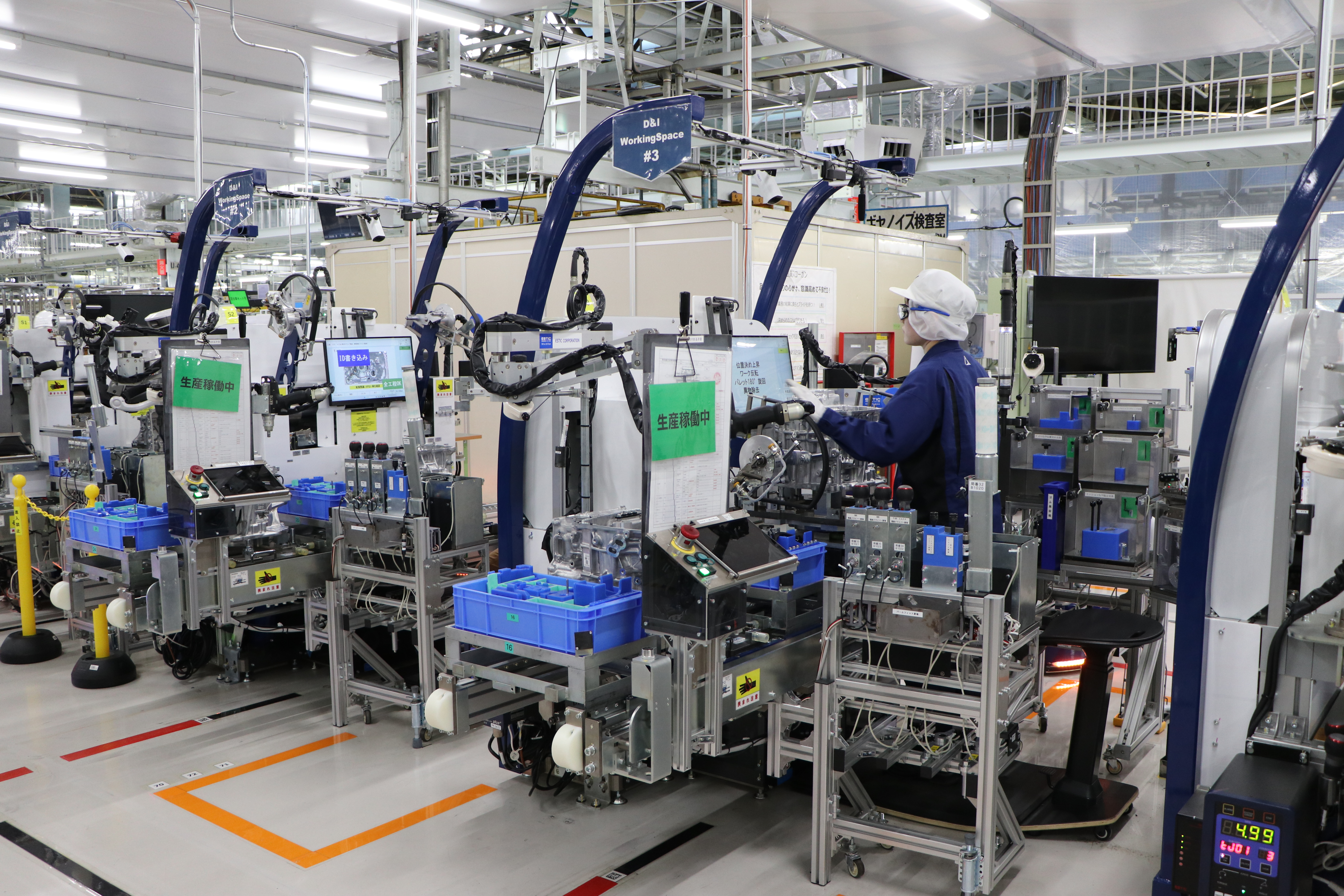
the cell production system
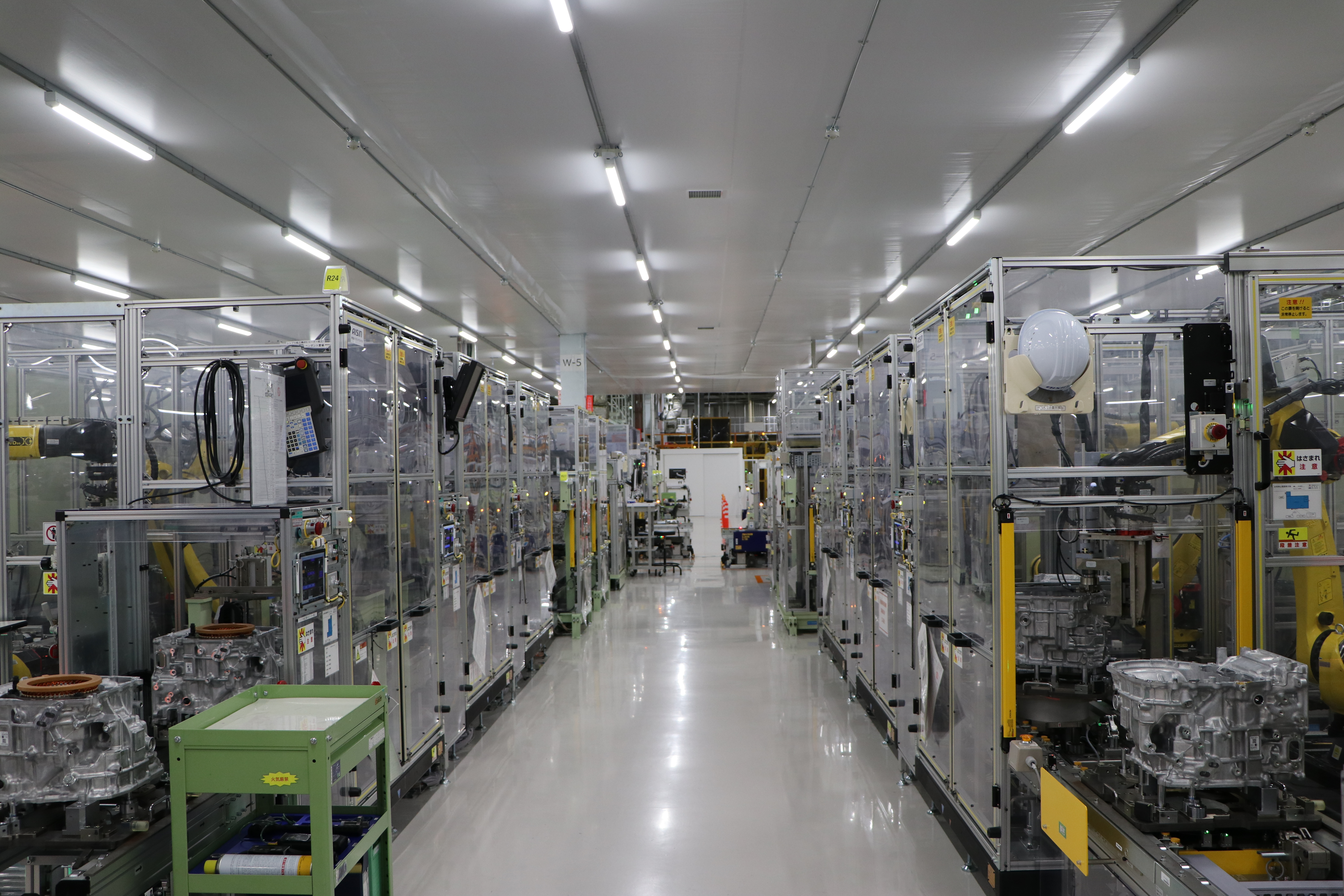
Line worker reaction has been positive, says Aoyama.
“Indeed, line members have said things like, ‘It’s easier to concentrate on my work without the psychological burden that the line can’t be stopped’ and ‘Being able to experience many assembly tasks myself, I can see what kind of products I’m making, so it’s rewarding,’” adds Aoyama.
One disadvantage of the cell production system is that the tasks are lengthy and take time to memorize. To address this, work support monitors installed in each cell show workers the key points of the tasks while they are working, thereby shortening the time it takes to become proficient. In addition, arrangements are in place to maintain overall productivity, such that experienced workers who can work quickly leverage their skills and compensate for the workmanship of new members, beginners, for example, who are not able to work at the standard speed.
Reducing production preparation workload through DX-based equipment verification
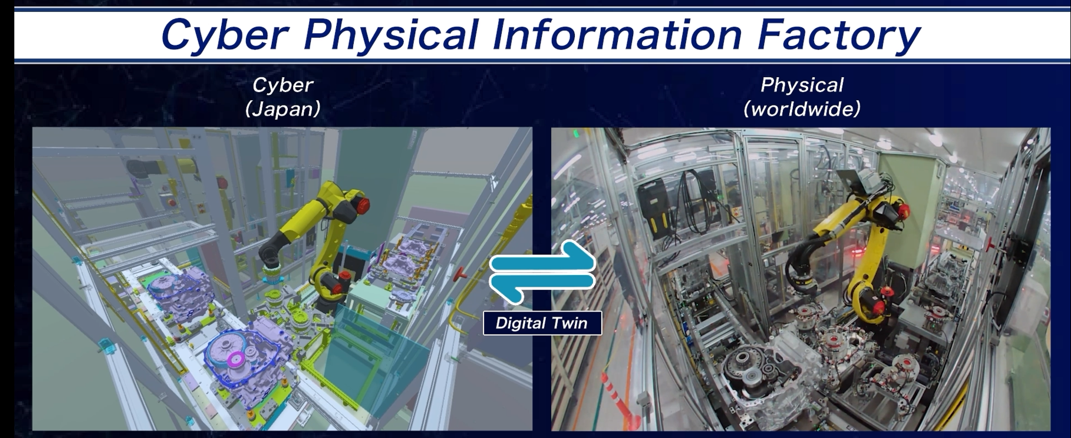
A defining feature of the second-generation eAxle production line is the full integration of digital equipment verification into the production preparation process. In the past, model changes or the addition of new variants required extensive trial runs and adjustments on physical equipment, an approach that consumed significant time and resources. With the new system, much of this verification can now be completed digitally in advance.
As a result, production preparation time has been reduced by 50 percent compared to the first-generation line, and by 70 percent compared to conventional production systems. By easing time and location constraints—and significantly reducing the psychological and physical demands associated with launch preparation—the new process improves team engagement and job satisfaction
Leveraging platform-based equipment and digital technology also enables faster, more cost-effective rollout of production lines at overseas facilities, where implementation once required substantial effort and lead time. Through the combined introduction of the cell-and-line hybrid production system, digital verification tools, and simplified, future-ready design concepts, we are building a sustainable manufacturing platform designed for long-term adaptability and growth.
Production technology resilient to change supports the full-lineup strategy
The cell-and-line hybrid production system is key to successful implementation of AISIN’s full-lineup strategy. It’s not possible to accurately predict what models will be launched in the future, in which regions, and on what scale. This is why production lines are required to be flexible.
By pursuing the optimal combination of fixed and variable frameworks of automation and human skills, we will pursue productivity and flexibility, as well as human growth and job satisfaction.
Related Article
“Manufacturing Power” to Expedite Vehicle Electrification
— Aisin’s Production Technology in Pursuit of Superiority
Share this article