

Created with feedback from the field, Michi-log ensures that safety is underfoot in future city technology
Mar.04, 2026
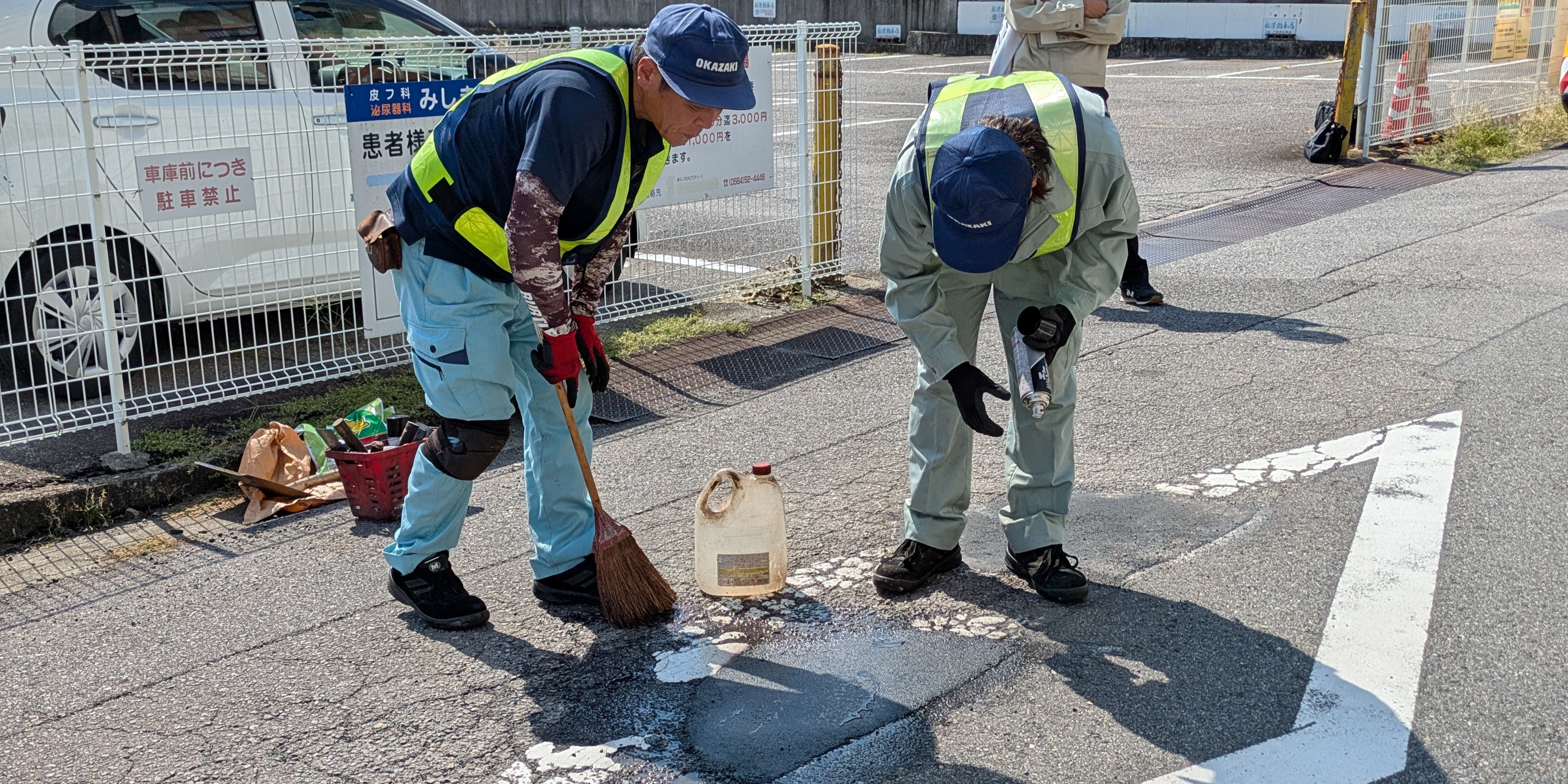
You may not notice, but the roads you travel every day are gradually deteriorating. Even with no obvious signs, small cracks continue to spread and subtle subsidence slowly advances beneath the surface, creating conditions that can lead to what appears to be a sudden and unexpected accident. The seriousness of this risk was underscored by the large-scale road collapse in Saitama Prefecture in January 2025. Because roads are so familiar to most drivers, their gradual decline often goes unnoticed. This is why a reliable system for continuously monitoring road conditions and implementing early corrective measures is essential.
Local governments charged with maintaining roadways are under increasing strain as aging infrastructure and persistent labor shortages stretch resources thin. For years, safety has depended largely on the dedication and sense of mission of field personnel, but that model is reaching a critical turning point. AISIN Corporation is committed to addressing this challenge with its advanced technology: Michi-log, an innovative road management support service designed to help communities maintain safer, more resilient infrastructure.
What is Michi-log?
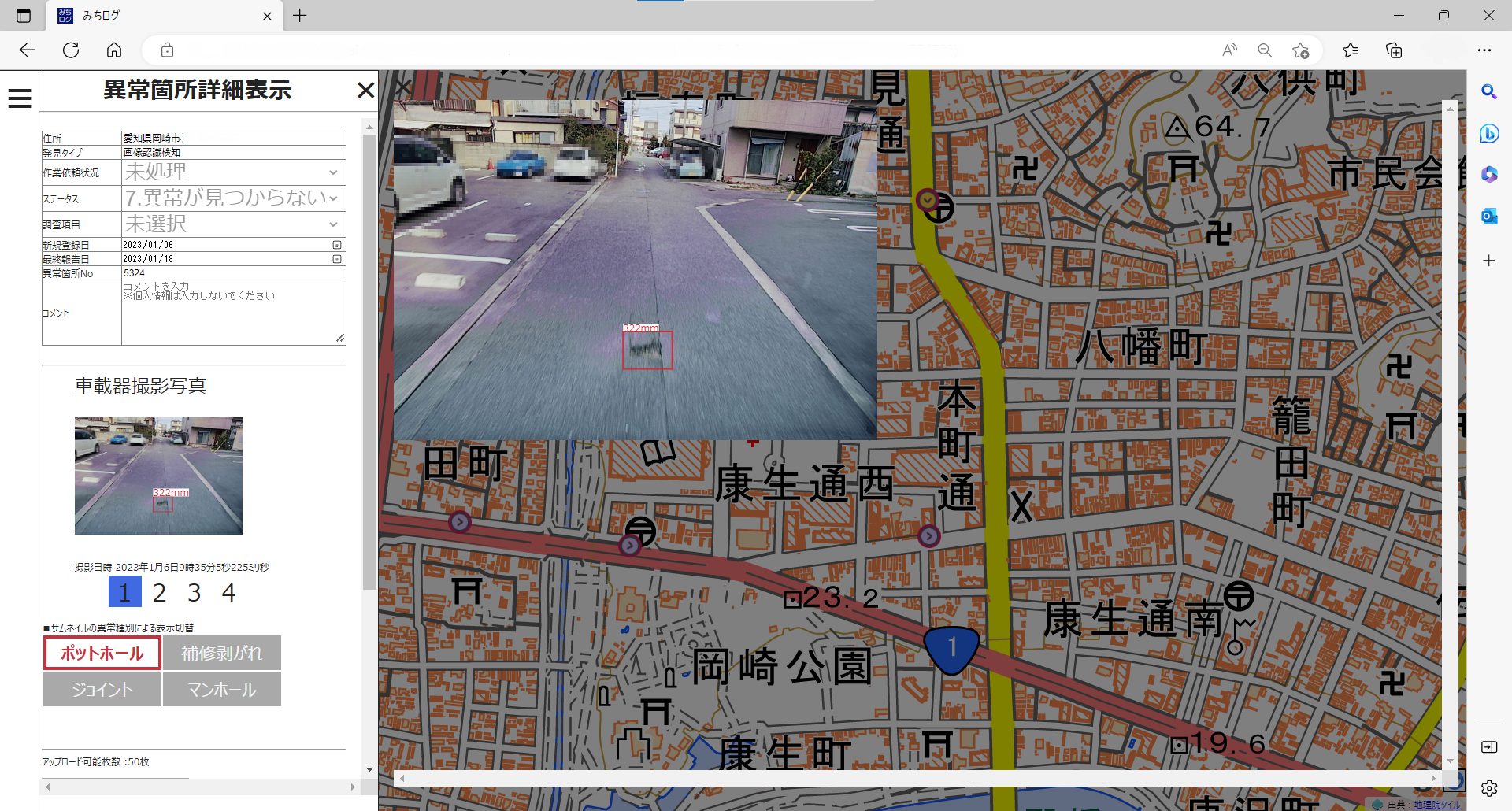
Michi-log is an advanced road maintenance and management support service designed to detect abnormalities early and help prevent accidents before they occur. By collecting data from vehicles in motion and applying AI-driven analysis, the system visualizes road conditions in real time. This enables municipalities to prioritize inspections, streamline repairs, and allocate resources more efficiently, transforming routine vehicle travel into a tool for smarter infrastructure management.
AISIN Corporation develops and manufactures a comprehensive range of systems essential to driving, turning, and stopping. As vehicles move, these systems generate valuable data — capturing driving dynamics and subtle changes in road surfaces through brakes, suspension, steering, and other components, along with surrounding environmental information gathered by cameras and sensors. By integrating this real-time vehicle data with the precise location intelligence cultivated through years of car navigation system development, AISIN transforms everyday mobility into actionable infrastructure insight. The result is tangible new value: the Michi-log service.
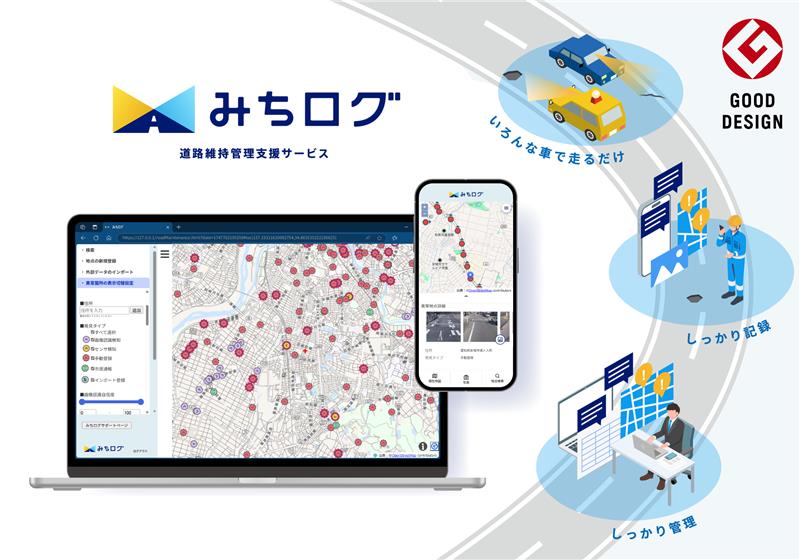
Best of all, this technology no longer requires a separate dedicated inspection vehicle. By installing equipment in vehicles that traverse the city daily, such as road inspection vehicles, taxis, package delivery vehicles, and garbage trucks data from their everyday driving is automatically collected and stored in a database.
The result is the beginning of a drastic change in road repair work in the field. Inspections that once required extensive time and human resources have been streamlined through significant gains in efficiency. In some cases, local governments have reduced their road management workload to as little as one five-hundredth of previous levels.
Freed from paper-based ledgers and processes reliant on individual experience, municipalities are building smarter work environments where roads can be maintained more effectively — even with limited personnel.
Next-day data delivery to the field… It’s fast!
One great advantage of Michi-log is its quick provision of data. Analysis results based on driving data can be provided to local governments as soon as the next day.
Sota Hashiguchi, in charge of platform development, explains the system's features:
“Michi-log is designed to handle steps from data collection to processing and visualization as one sequence” says Hashiguchi. “Data collected during driving is first sorted out in the car, and then only the relevant information is sent, rather than sending all of the collected data directly to the cloud. As a result, it has become possible to provide analysis results in a short amount of time, making it easier for local government officials to understand the situation and for the field staff to make quick decisions.

The development of Michi-log is powered by AISIN’s mobility service platform, which seamlessly manages vehicle-collected data from acquisition through analysis and visualization, delivering actionable insights to the field with speed and reliability. The platform is equipped with robust security features essential for local governments, including secure data analysis and user access management. As a result, when municipalities ask, “Can it do this?” or “Can it be adapted for this task?” new capabilities can be deployed quickly to meet on-site needs without rebuilding the system from the ground up.
Thanks to this foundation, Michi-log services became active about one year from the launch of the project. The fact that the service was able to be deployed quickly rather than remaining in the demonstration phase is a major benefit for local governments that are rushing to solve on-site issues.
Unless you know the field, you won't get the right answer
The concept behind Michi-log was not borne from theory alone. From the earliest stages of development, project leader Takayuki Miyajima immersed himself in the realities faced by local governments. Beginning in 2019, he conducted extensive interviews, joined road inspections, and observed on-site operations firsthand. By understanding the daily challenges of field personnel, the team was able to shape a solution grounded in practical experience, not assumptions
Miyajima recalls, “I had the notion that the main task in maintaining roads by local governments would be repairing them, but in reality, the work was much more varied than I had imagined, including cleaning street gutters, dealing with fallen trees, and disposing of animal carcasses. Just responding to requests from citizens was keeping the field staff busy on-site.”

Communication was by telephone and records were on paper. If there was an abnormality, the staff headed to the site, and when they returned, the next phone call would come in. Miyajima witnessed a reality that was far from efficient, which produced the question: “Is there a way to at least lighten the workload of road maintenance?” This idea was the starting point for developing Michi-log.
Being stuck between imagination and reality
In the early stages of development, the team focused on ease of viewing and assumed that Michi-log would be used on a large tablet device. However, the reaction of the field staff was very different from what was expected.
“What I do is watch the traffic, get out of the vehicle quickly, take photos, and then get right back to work. I can't afford to keep both hands on the tablet,” according to a road maintenance worker. And, with just that concern, the program developers' premise collapsed.
What was needed was a device that could be taken out of a pocket and operated with one hand.
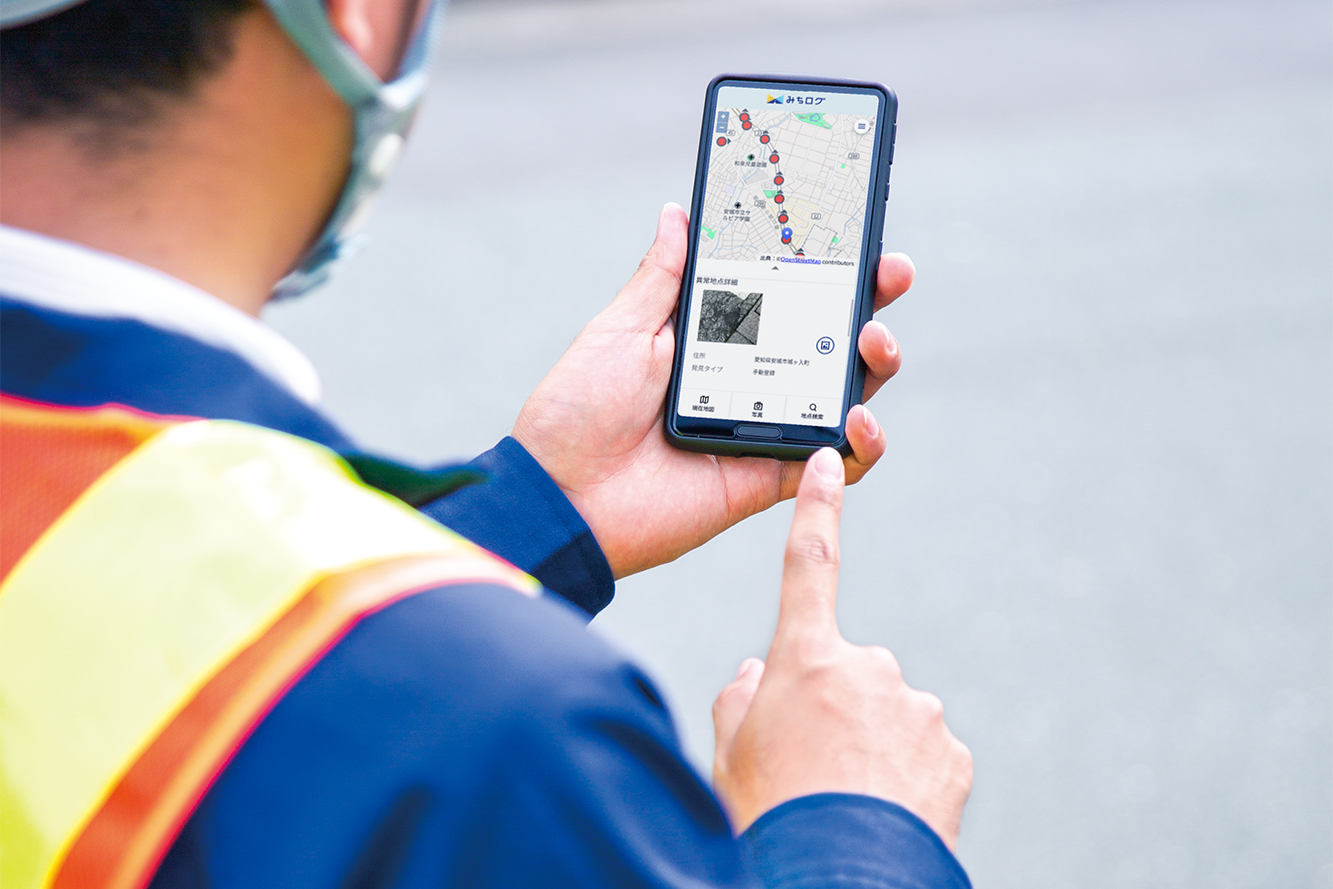
In the field of road maintenance work, not every user is familiar with digital tools. That's why, no matter how advanced or helpful a technology is, it won't be used in the field if it isn't intuitive.
“Sometimes, things that we prepare because we think they will be ‘useful’ end up not being used at all,” says Miyajima. “In contrast, a casual comment can produce the biggest challenge. Because things can happen that differ from what we imagine, I felt that we needed to listen carefully to the voices of those on the ground.”
No matter how advanced technology is, it is meaningless unless it is used. This realization helped to instill in the team an attitude of staying close to others.
A lesson that began with harsh words
As the development progressed, the team faced harsh realities. At the time, they did not have enough understanding of the detection accuracy required by each local government, and the technology itself was not yet mature.
Some local government officials saw that the technology fell short of the expected detection accuracy and uttered harsh words regarding accountability to citizens and the importance of a project that uses tax money. The development team was confronted face to face with the difficult position that local governments were in.
Varying needs among each local government made things even more difficult. Some local governments wanted to keep track of a wide range of abnormalities, including minor ones, while others were satisfied with identifying only those abnormalities that required immediate repair.
This difference had a direct impact on the design of AI detection accuracy. How much of a variance should be considered abnormal? Is the goal to reduce missed detections or reduce false positives?
It wasn’t easy to reconcile the correct technical solution with the practical operational requirements of local government.
Overcoming difficulties with accumulated knowledge
After receiving stern feedback, the team took a fresh look at the company’s internal resources. Since the launch of the Michi-log project, development had relied on the technologies and expertise AISIN had built over the years. At this stage, however, the team carefully reconsidered how those resources could be organized and combined to better address the real needs of local governments.
AISIN already had several strengths it could draw on: platforms developed and operated in-house, in-vehicle device design technology cultivated through car navigation system development, and expertise in visual inspection AI used on automotive parts manufacturing lines. The team applied these capabilities to road maintenance and management, aiming to strike the right balance between detection accuracy and ease of use.
This process involved three months of trial and error. As the service steadily improved, evaluations from local government officials also began to change. These efforts were not limited to a single municipality. The team gradually expanded its work with other local governments as well. In addition to Michi-log’s improved performance, the team earned strong praise for its commitment to listening to frontline feedback and continuously improving the service. As of January 2026, Michi-log had been introduced in 21 municipalities, including trial deployments.
What began as an effort to respond to harsh criticism has since grown into a service chosen by many local governments. Behind this success is a consistent history of listening to feedback from the field and using accumulated technology and expertise to make ongoing improvements.

Technology developed in Japan is spreading worldwide
The technology developed in Japan is beginning to spread around the world. Building on its success in Japan, Michi-log is now taking strong steps into overseas markets.
“Japan is one of the countries in the world with the highest level of road maintenance,” says Miyajima addressing the team's overseas initiatives. “Our skills—honed in an environment where inspections and repairs are carried out daily under strict standards—are world-class. Improving the efficiency of road maintenance is a common challenge that transcends borders. As of January 2026, Michi-log was being tested in the United States, Thailand, and India as well as in Japan. It was great to realize that the efforts we had pursued in Japan were also needed overseas.”
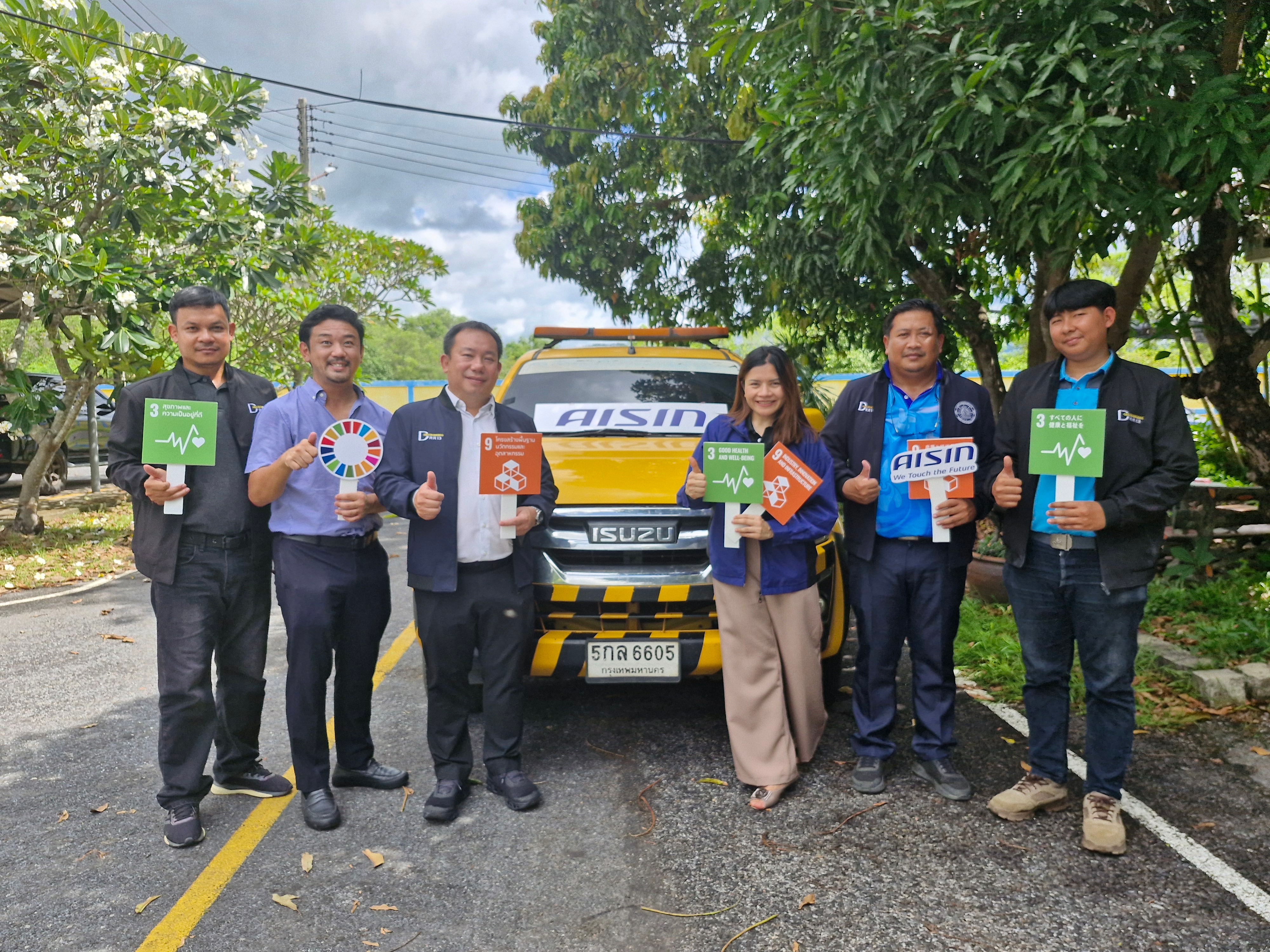
Road structures, management systems, and inspection and repair rules vary from country to country, but the desire to grasp the condition of roads and respond appropriately is common to all countries. Overseas, our efforts are under way to explore ways to utilize Michi-log while considering the situation in each country and region and placing importance on the attitude of being there for others.
From road maintenance to urban ecosystems
Currently, Michi-log is being used primarily for road maintenance and management, but its system should be applicable beyond roads. As it is used in the field, we are beginning to see uses and applications that were not initially envisioned.
Yoshiya Ito, who oversees Michi-log sales, says the scope of Michi-log’s use is expanding.
“In some local governments, there have been cases where an employee in charge of Michi-log was transferred to another department and the employee consults us about issues facing the department,” says Ito. “‘Could this system be applied to other management issues?’ As more and more clients begin to speak of such wishes, the scope of Michi-log's use is gradually expanding.”

We are looking ahead to the concept of an urban ecosystem. Rather than being completed within one department or one task, the various management targets and issues scattered throughout the city can be loosely connected with each other. Michi-log is evolving into a foundation at the center, connecting information with the field and supporting the management of the entire city. In the future, we are looking to expand the scope of Michi-log to cover not only road accessories such as road signs and manholes but also park equipment, public facilities, vacant house management, and resident monitoring.
Other future possibilities include using Michi-log in times of disaster. When a disaster occurs, information is gathered by visiting the site. Can Michi-log be used for that purpose and to share information and make decisions faster? According to Ito, studies are under way.
“I don't think Michi-log is a system that is completed within the government alone,” says Ito. “It is a tool for solving a variety of issues with the aid of the private sector, utilizing the resources and information already available within the city. I want to develop Michi-log into the center of the urban ecosystem.”
Of course there are many, many things in the city that need to be managed daily. If we could sustain them through a common system rather than handling them individually, the very nature of city management may change. Michi-log continues to evolve with an eye on this future.

Share this article