


1Superconducting materials and their application technology, aiming for the ultimate energy saving technology
1)Development of high-Tc superconductors (Final Goal: room-temperature superconductor)
Superconducting phenomena show completely zero electrical resistance below Tc (= superconducting transition temperature). Material that exhibit superconductivity is called superconductors. Superconductors have attractive characteristics, but Tc is low. It is necessary for practical applications of superconducting materials to develop high-Tc (Room temperature)superconductors.
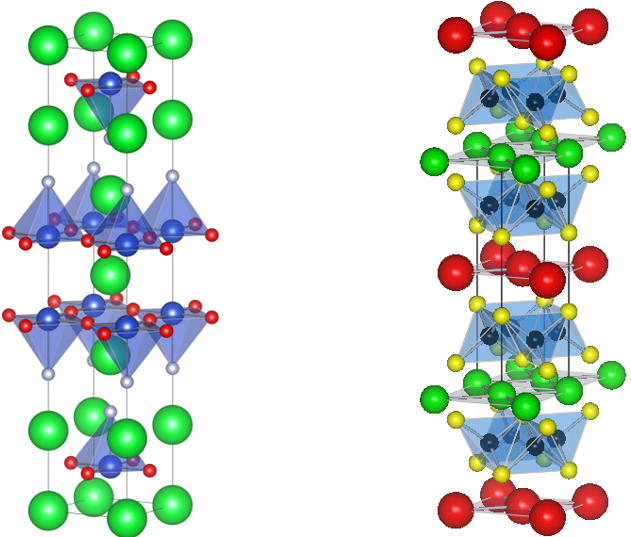
Recent outcomes
■ Developed new superconductors: >70
■ (Ex.) developed superconductors,
・Ca-Free Cuprate (ex. Sr₂SrCu₂O4(O,F)₂)Tc = 107K
・1144 type structure (ex. CaKFe₄As₄)Tc = 35K
Current research
■ Challenge to develop new high-Ts superconductors with new ideas
• New composition containing light elements in constituent elements
• Achievement of superconductivity of magnetic materials
2)Research on superconducting application products
Based on our experience in developing superconducting bulk and wire for NMR applications and Superconducting motor, we are currently working on the development and new products.
Ex.1): Superconducting Bulk Magnet for small-size NMR
Development of ultra small NMR system (approx. 1/10) using "superconducting bulk magnets" and "air-cooled refrigerators"
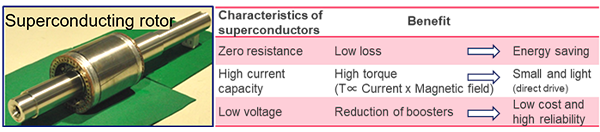
Ex. 2): Superconducting Induction & synchronous motor
Reduction of CO₂ emissions from transport equipment using superconducting induction synchronous motor
2Application of life sciences (biotechnologies)-Research on environmental technologies contributing to CO₂ reduction
Living organisms have formed a highly efficient mechanism through the evolutionary process over a long period of time.
We apply an engineering approach to this mechanism to create novel functions and enhance efficiency.
<Research example>
Greenhouse gas fixation technology by promoting plant growth
We are unique in how we control DNA. Using this genome editing technology, we are doing research to increase the growth rate of plants so that they can absorb more greenhouse gases.
Technology for creating ultra-light and high-strength fibers through biotechnology
Using our own technology to modify enzyme catalysts, we are conducting research to modify catalysts where bacteria can produce cellulose nanofibers at high speed. If this technology is realized, an ultra-light and high-strength fiber-reinforced plastic will be realized, and its application to energy saving by reducing the weight of cars can be expected.
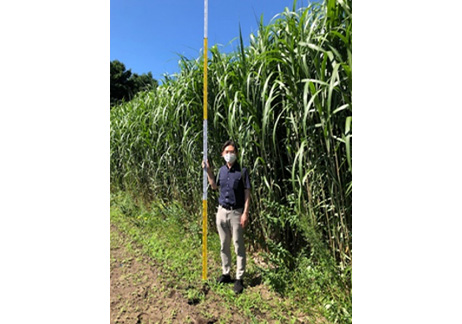
Giant miscanthus