


Products and Businesses
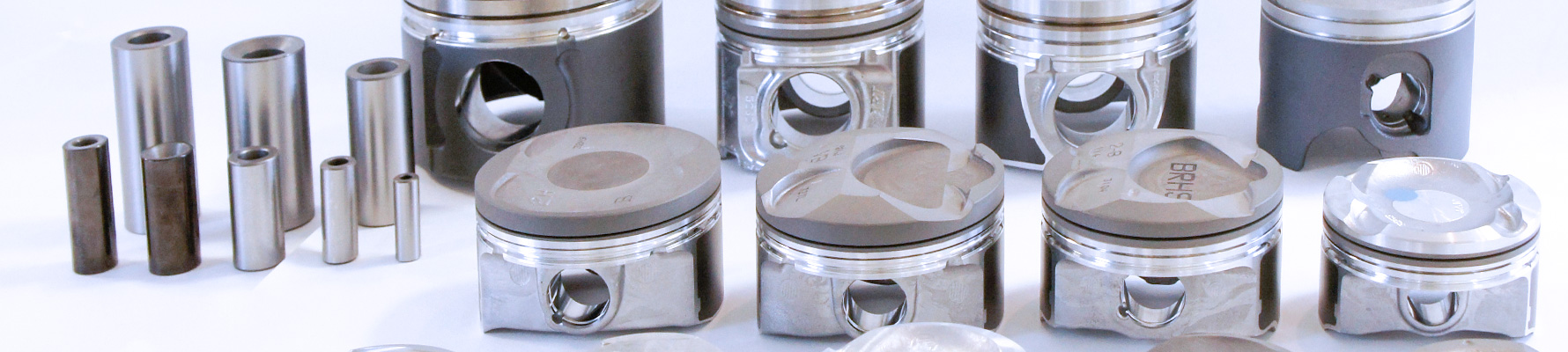
Based on our proprietary research and technology,
we provide world-class pistons through an integrated production process.
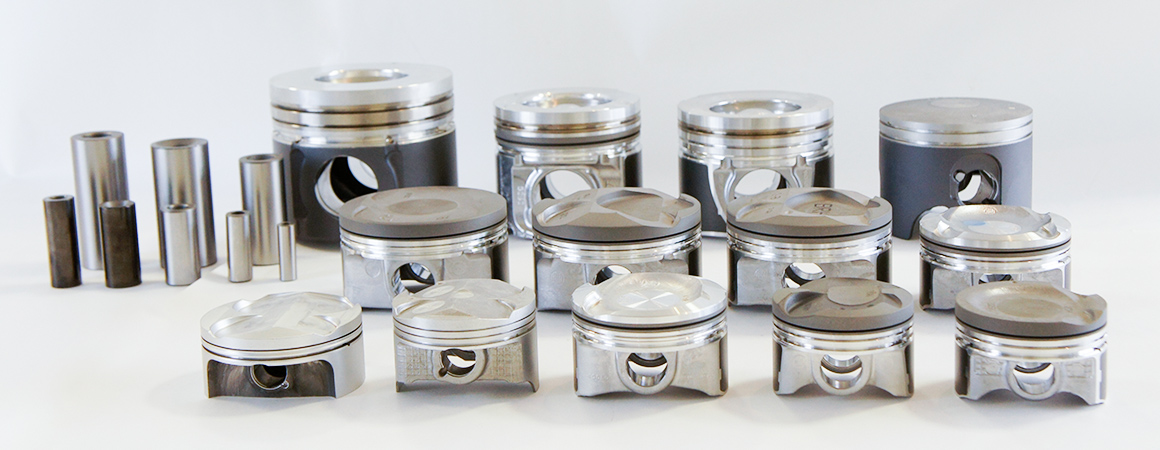
To address global environmental challenges and enhance safety and comfort, our creative, high-quality, and high-performance Art pistons play a vital role in engines worldwide.
Always staying ahead of trends such as improved fuel efficiency and higher power output, Art pistons are used in a wide range of applications—from passenger and commercial vehicles to outboard motors, general-purpose machinery, and racing engines. These products are born from our relentless R&D and a steadfast spirit of craftsmanship. We are highly regarded in both domestic and global markets, actively engaging in international sales, overseas assignments of technical and sales staff, and technical alliances with global manufacturers.
We believe that the mission of Art is to earn even greater trust in domestic and international piston markets through cutting-edge technology that stays one step ahead.
Pistons for Gasoline Engines
While modern gasoline engines demand lightweight and low-friction pistons for better fuel economy, they also face greater stress from downsizing and high-speed operation. We achieve high-performance results by balancing “thin-wall weight reduction” with “robust strength and reliability.” This is made possible through our CAE-driven optimized designs and the integration of cutting-edge manufacturing technologies.
Pistons for Automobiles
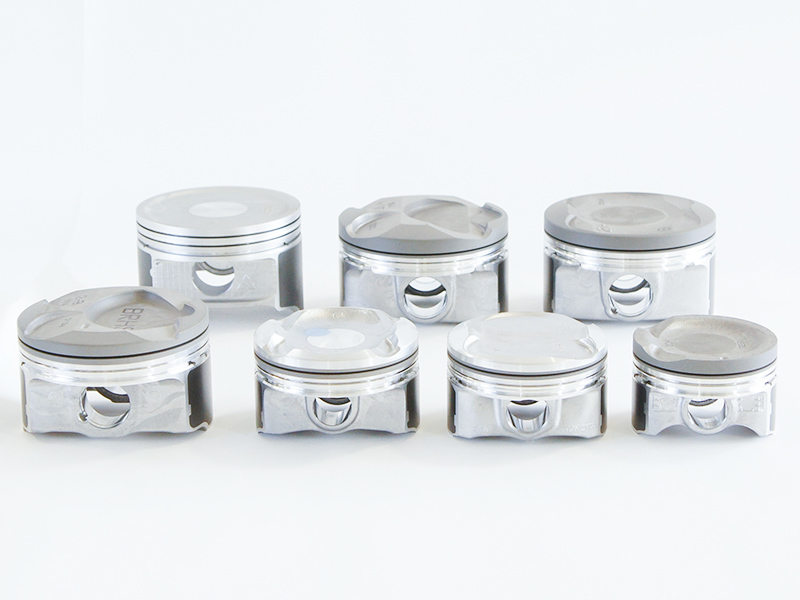

These images are used by Art Metal Mfg. Co., Ltd. under license from Toyota Motor Corporation, Daihatsu Motor Co., Ltd., Suzuki Motor Corporation, and Mitsubishi Motors Corporation. Unauthorized reproduction or diversion of these images is strictly prohibited.
Pistons for Motorcycles
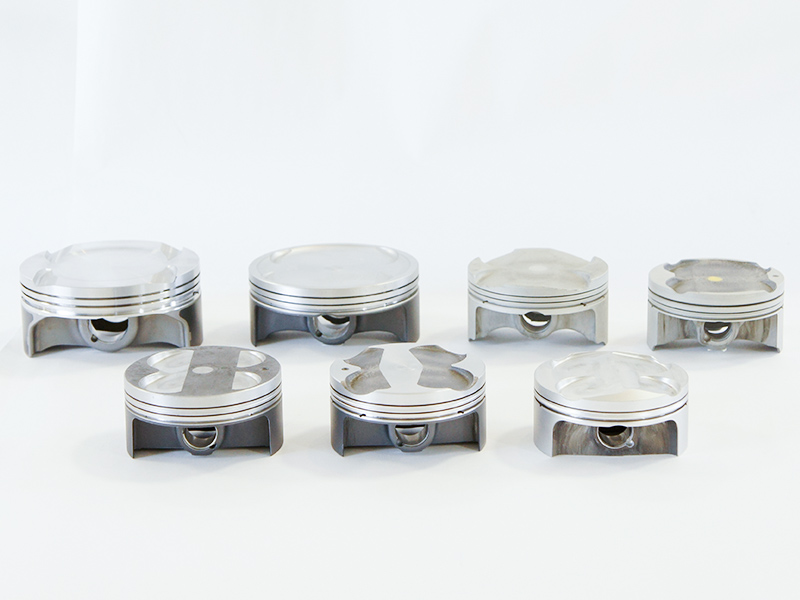
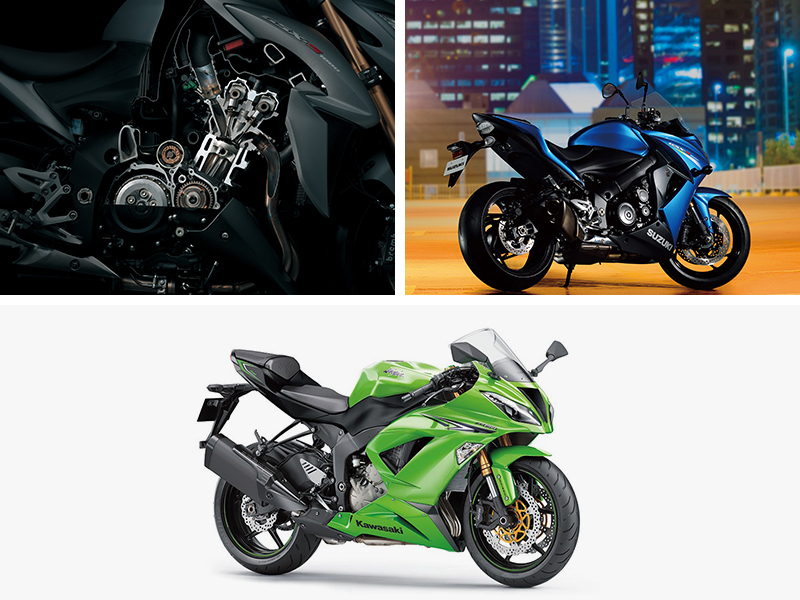
These images are used by Art Metal Mfg. Co., Ltd. under license from Suzuki Motor Corporation and Kawasaki Heavy Industries, Ltd. Unauthorized reproduction or diversion of these images is strictly prohibited.
Pistons for Outboard Motors and Personal Watercraft (Jet Skis)
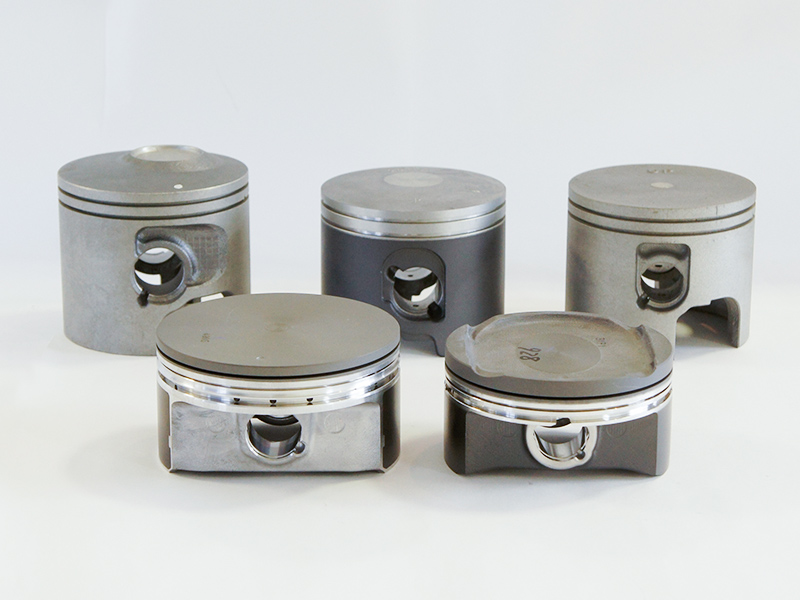
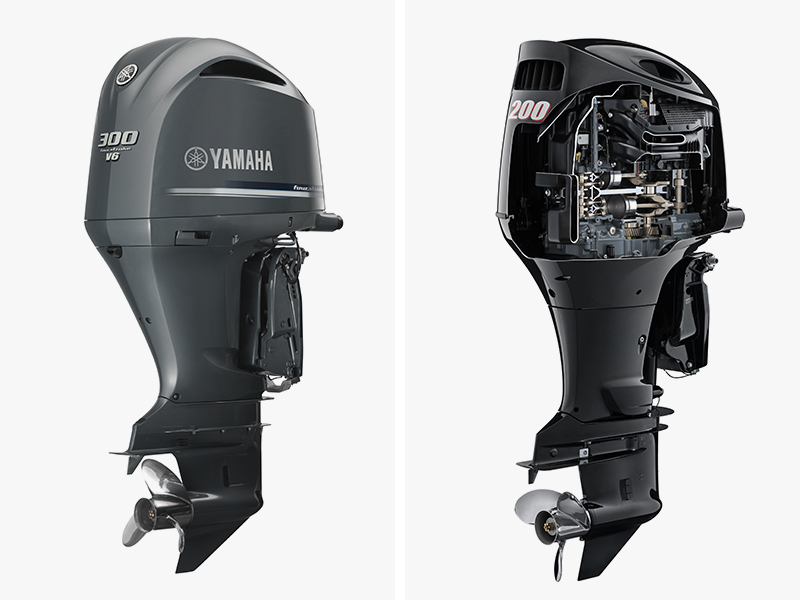
These images are used by Art Metal Mfg. Co., Ltd. under license from Yamaha Motor Co., Ltd. and Suzuki Motor Corporation. Unauthorized reproduction or diversion of these images is strictly prohibited.
Pistons for Diesel Engines
Diesel engines offer better thermal efficiency than gasoline engines, leading to lower CO₂ emissions and growing expectations for their role in preventing global warming. To meet stringent emissions regulations for “clean diesel” engines, we develop pistons that satisfy high heat resistance and durability requirements by applying optimized cooling structures, high-strength materials, and innovative technologies.
Pistons for Automobiles
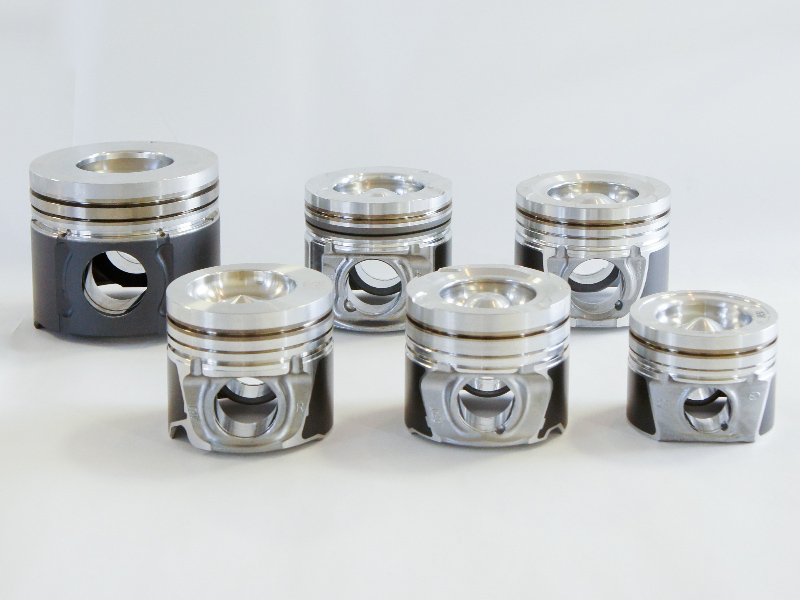

These images are used by Art Metal Mfg. Co., Ltd. under license from Toyota Motor Corporation and Mazda Motor Corporation. Unauthorized reproduction or diversion of these images is strictly prohibited.
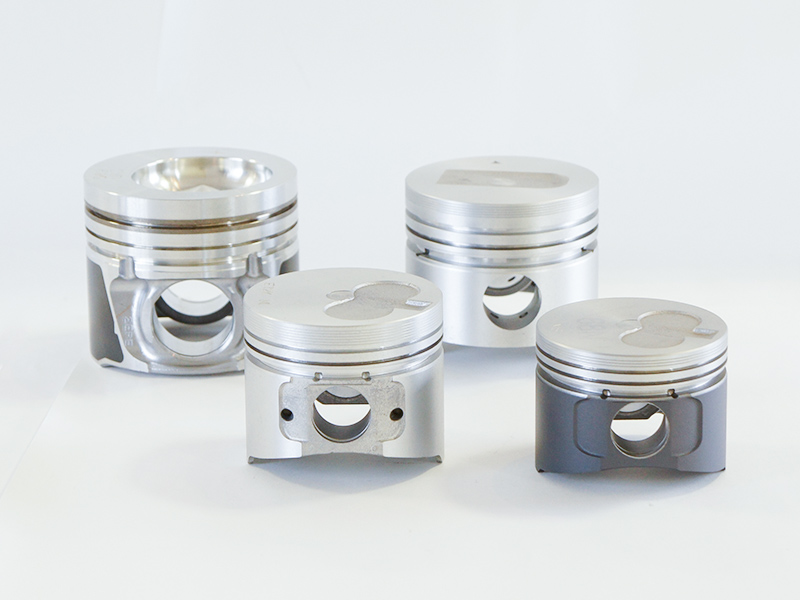
Pistons for General-Purpose Engines
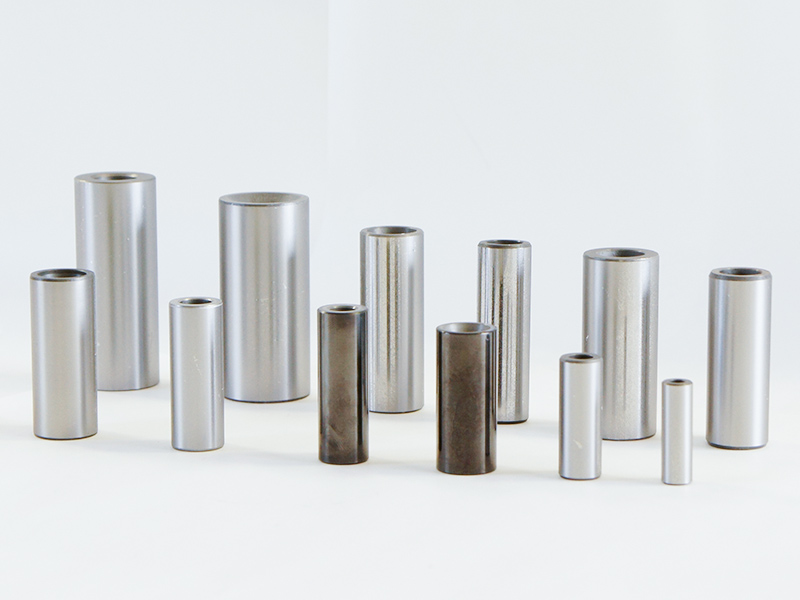
Piston Pins
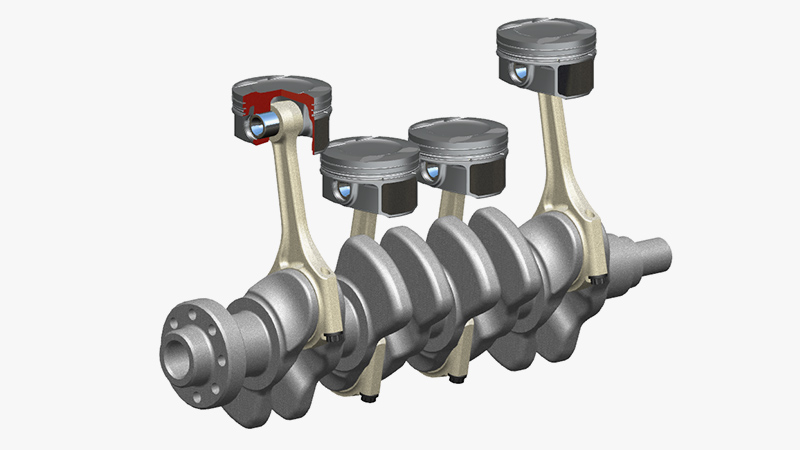
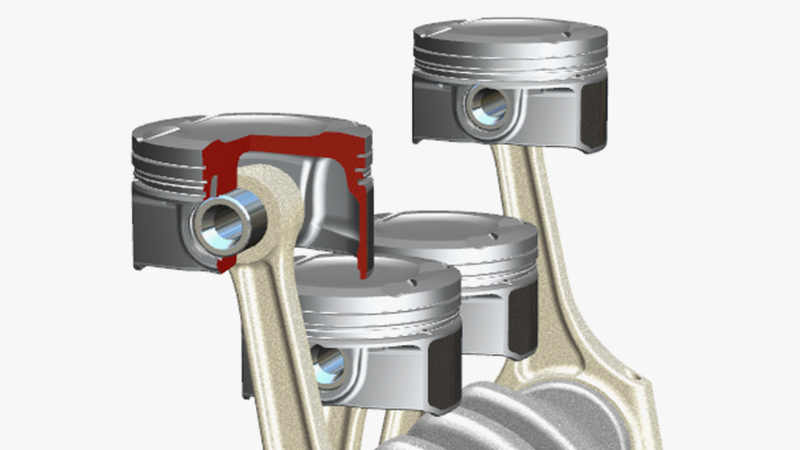
Piston pins connect the piston to the connecting rod. To reduce weight, they feature a hollow structure made of materials such as chrome alloy steel with surface hardening treatments, ensuring both strength and wear resistance. In recent years, an increasing number of our products are coated with DLC (Diamond-Like Carbon) to further reduce friction and improve seizure resistance.
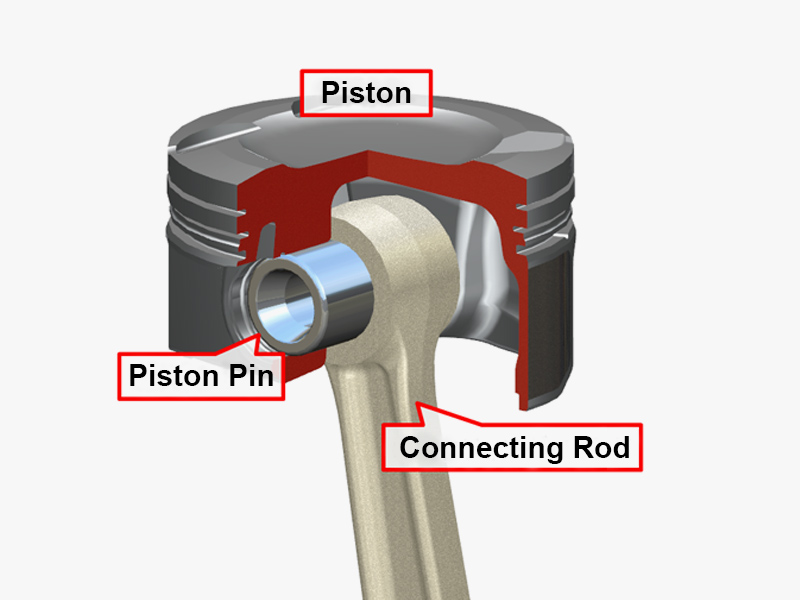
What is a Piston?
In an internal combustion engine, the piston is the “key” component that converts combustion (thermal) energy into kinetic energy.
Within the engine, it must withstand temperatures exceeding 300°C and high pressures over 10 MPa, while reciprocating at several thousand revolutions per minute. It is a component that demands both “toughness” to endure such conditions and “precision” to perform at high speeds.
Main Piston Components and Their Functions
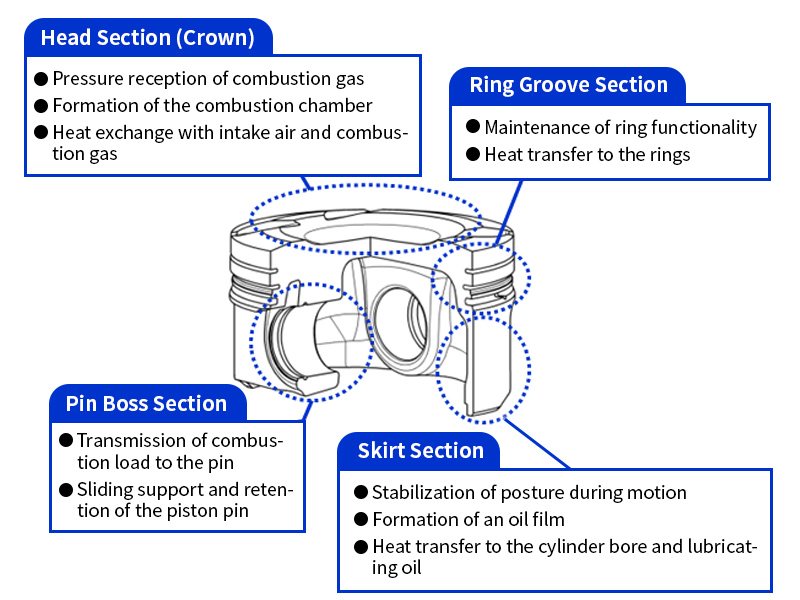
Balancing Strength and Lightweight Performance
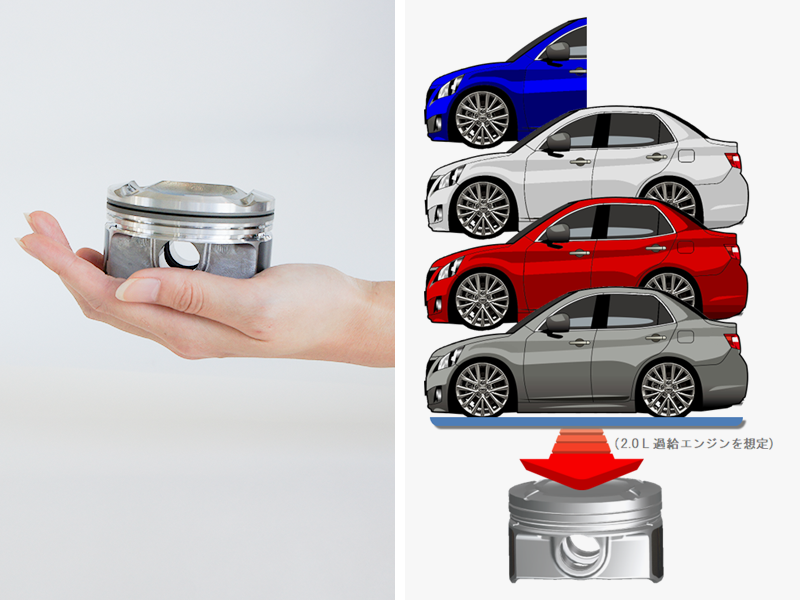
Robustness to Withstand Immense Combustion Pressure
An automobile piston is a small component—compact enough to fit in the palm of your hand—yet it must withstand a combustion load equivalent to the weight of several vehicles.
Demand for Weight Reduction
As a reciprocating component within the engine, a lighter piston directly contributes to enhanced engine performance by reducing friction and vibration while improving throttle response.
Therefore, there is a constant demand for pistons that are both robust and lightweight.
Contribution to Improved Combustion
Modern Internal Combustion Engines
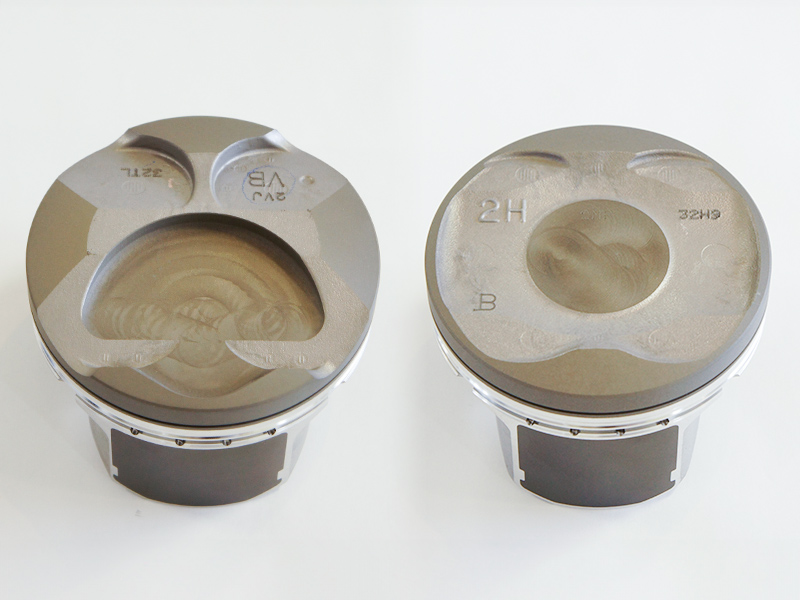
With the ever-increasing demand for fuel efficiency, engines are required to achieve highly efficient combustion, leading to a rise in direct-injection engines.
By optimizing the shape of the piston crown, we contribute to achieving superior combustion efficiency.
Heat Transfer from Combustion
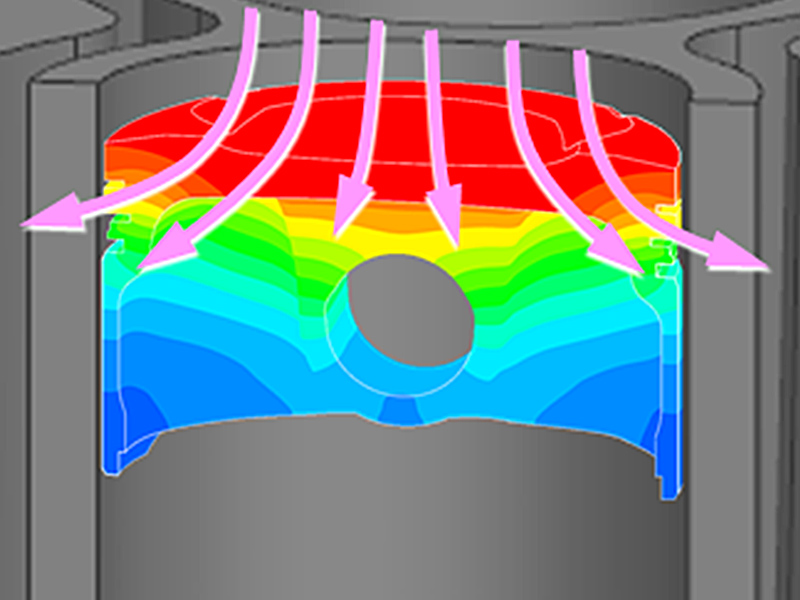
Rising temperatures within the combustion chamber can lead to “abnormal combustion” (engine knocking) or “piston melting.”
By transferring the heat generated during combustion through the piston rings to the cylinder, coolant, and lubricating oil, we effectively control the temperature of the combustion chamber.
Contribution to Fuel Efficiency
To improve fuel efficiency and engine quietness, pistons—as moving parts—must achieve “smooth motion.”
Optimal Clearance and Profile
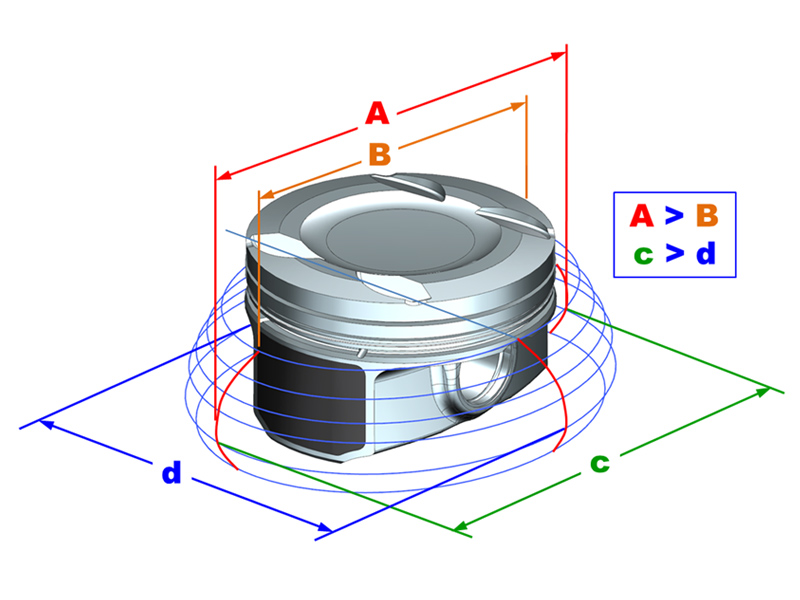
The outer diameter of the piston, which moves up and down within the cylinder, requires precision on the order of micrometers (μm).
Furthermore, the outer profile of the section known as the “skirt” features complex curved surfaces, including “barrel” and “oval” shapes.
Surface Treatment for Friction Reduction
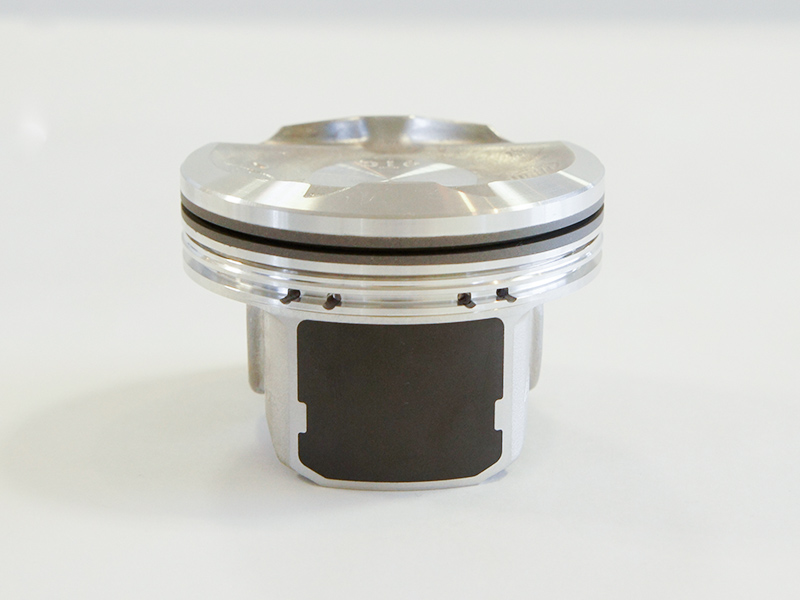
To reduce friction, an increasing number of pistons feature resin-based coatings applied to the skirt section.
Additionally, some models adopt FSR (Fine Surface Reforming) treatment, a technology designed to further reduce friction and improve lubrication conditions.
Postural Stabilization
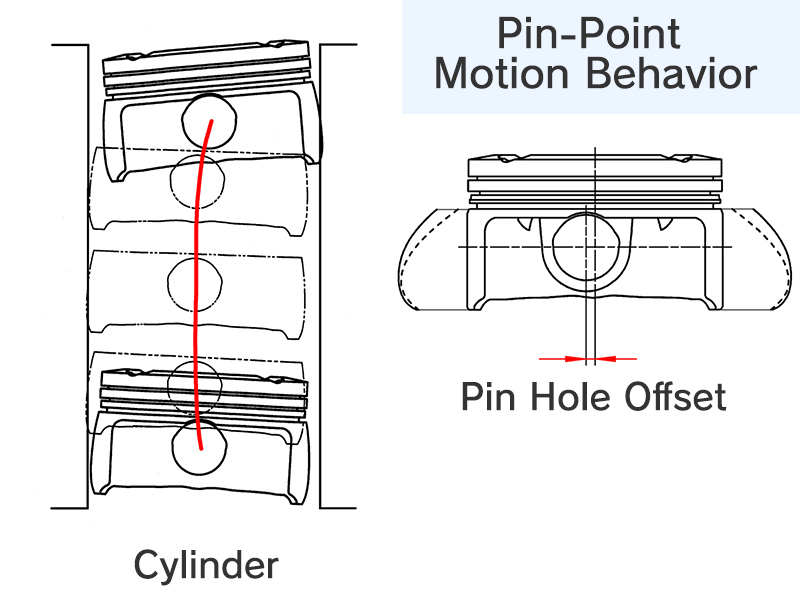
Poor piston posture (tilting) during its reciprocating motion can lead to issues such as increased “slap noise” from cylinder wall impact and higher oil consumption.
By offsetting the pin hole position and optimizing the skirt profile, we achieve stable piston behavior.